

|
|
|
New Classifications of English Roses
|
In David Austin's book 'The English Roses', for the first time he divided the English Roses into four groups. Each group is very different, both in breeding and character. There is also a group of Climbing English Roses. One thing that these groups have in common is that they were all originally the result of crossing old roses with modern hybrid teas, even though this may be far back in their ancestry.
Each of the four groups of English Shrub Roses has a different character and its own particular type of beauty. We believe this classification will help gardeners to understand the range of English Roses better and appreciate the different beauty of each group.
|
|
ENGLISH OLD ROSE HYBRIDS
These were the original English Roses. They have much of the character of the true old roses – the gallicas, damasks, etc – although they do vary widely between one variety and another.
Like the old roses, their colors are, in the main, beautiful soft shades of pink, crimson and purple. They usually form small bushy shrubs and repeat flower regularly. They have a strong fragrance, often of the old rose type.
They are excellent garden roses that mingle well with other plants.
|
|
THE LEANDER GROUP
The Leander Group leans a little more towards the modern roses in character than do the old rose hybrids, although their flowers are still of typical old rose formation. They usually form large, robust shrubs with elegantly arching growth.
The flowers are large and gracefully poised on the branch, providing a pleasing effect. The colors are wide-ranging, including many rich yellows and some flame shades.
Their fragrance is strong and varied – sometimes of the old rose type, sometimes tea rose or myrrh. These scents are frequently mixed with fruity undertones such as raspberry, lemon or apple.
|
|
ENGLISH MUSK ROSES
The English musk roses were bred by crossing our original old rose hybrids with noisette roses.
Like the noisettes, they are lighter both in flower and growth than the previous two groups; the whole effect being one of daintiness and charm. Their colors, too, have a softness that is most appealing in a rose, with fresh pinks, blushes, soft yellows and shades of apricot and peach.
The musk rose fragrance is missing except in a few varieties; nonetheless, nearly all the other fragrances are to be found in these roses, sometimes mingled with the Musk scent.
|
|
ALBA ROSE HYBRIDS
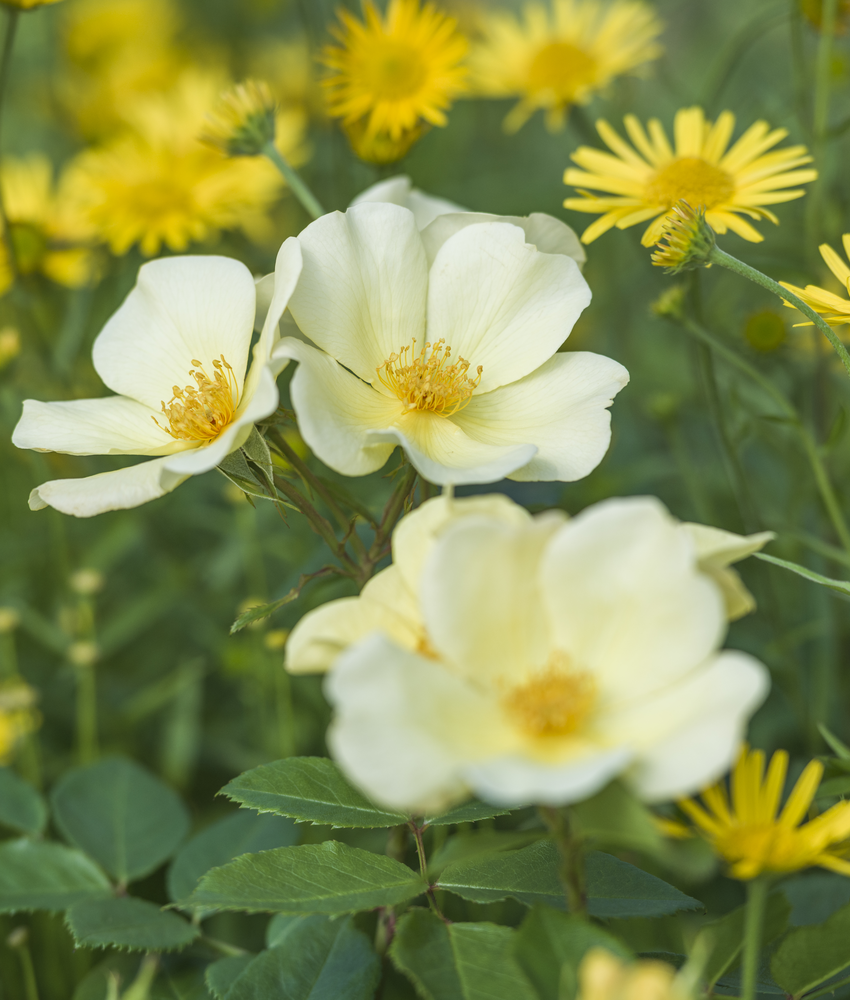
These are the most recent roses of the English Rose family and a little way removed from the other groups. The difference lies in their almost wild rose growth, which makes them suitable not only for more formal planting, but also for the wilder areas of the garden. Their breeding originates in crosses between Alba Roses and other English Roses.
They usually have light and airy growth with foliage of a similar nature. Their colors at present are largely confined to shades of pink.
The flowers are light and dainty and some gardeners regard this group as being among the most beautiful of roses.
|
|
CLIMBING ENGLISH ROSES
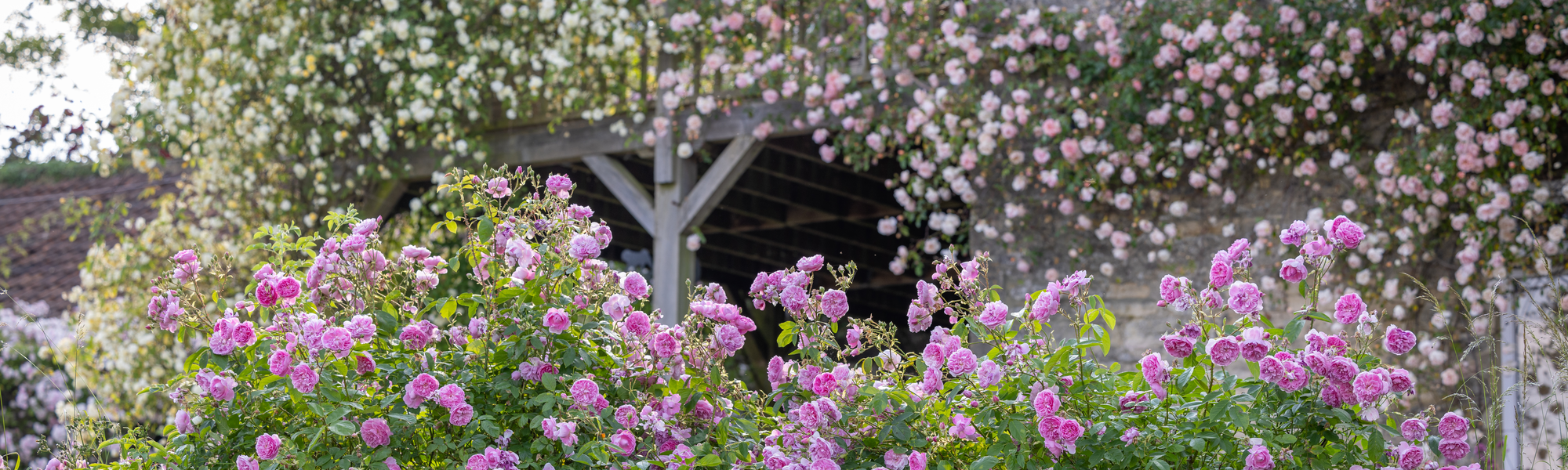
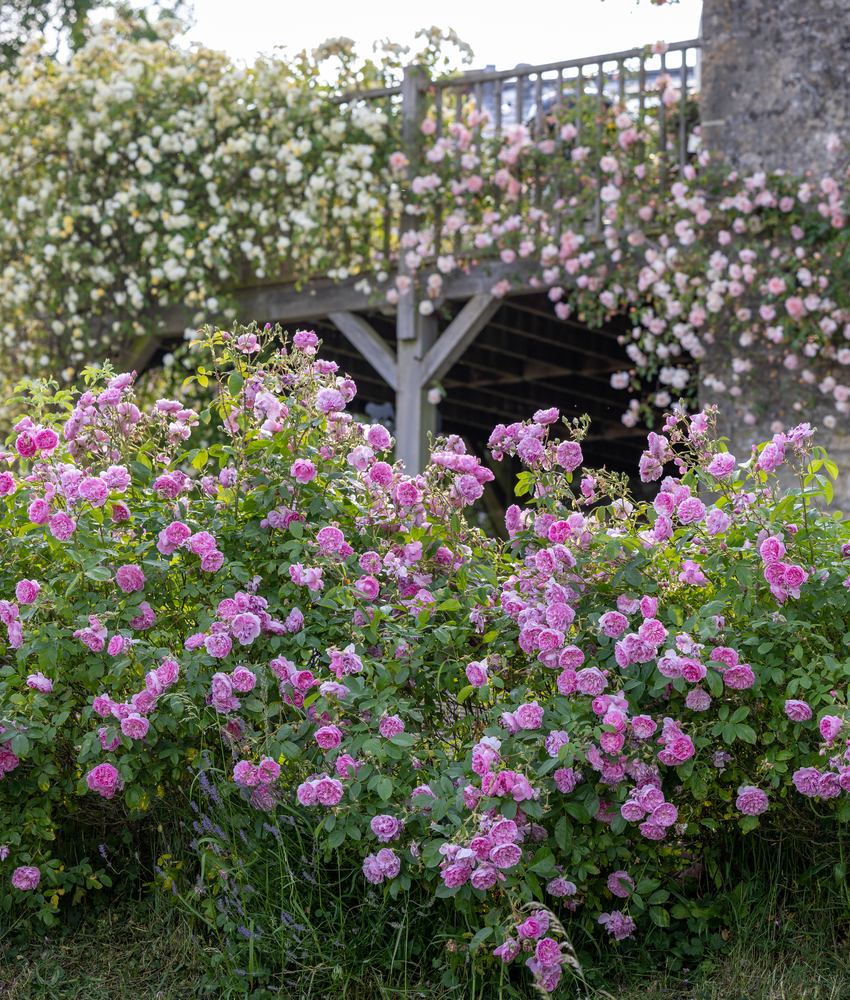
Not everyone is aware that the English Roses include some very beautiful climbing varieties. In fact, it might be claimed that the English Roses never look better than when climbing on a wall. Here, they look down upon us in the most appealing manner. The taller varieties are also ideally suited to arches, rustic work, etc. and seem to do almost equally well in a north or south-facing position.
They are not a breed in their own right, but are shrubby varieties of the other groups, that have proved their ability to climb.
Most of them are suitable for growing both as climbers or as shrubs.
|
|
|