
The King's Rose: Our First Striped English Rose
Named in honour of King Charles III

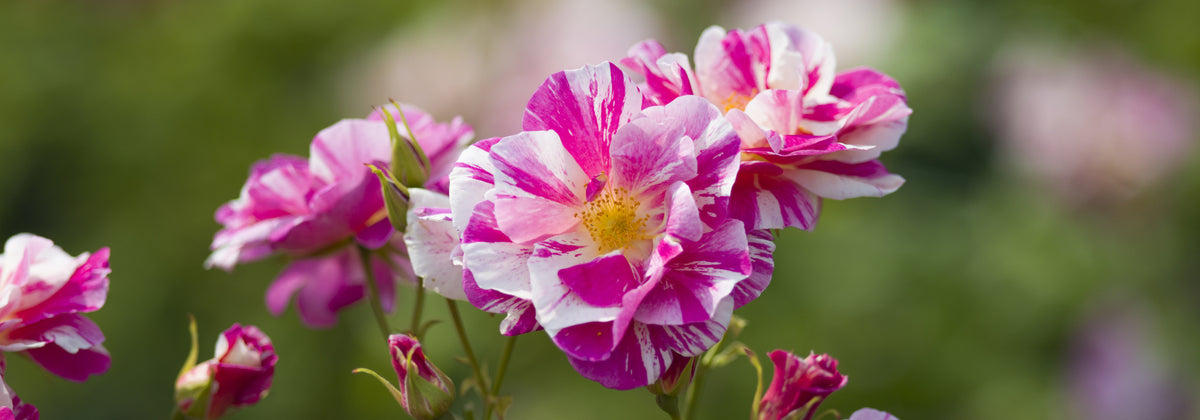
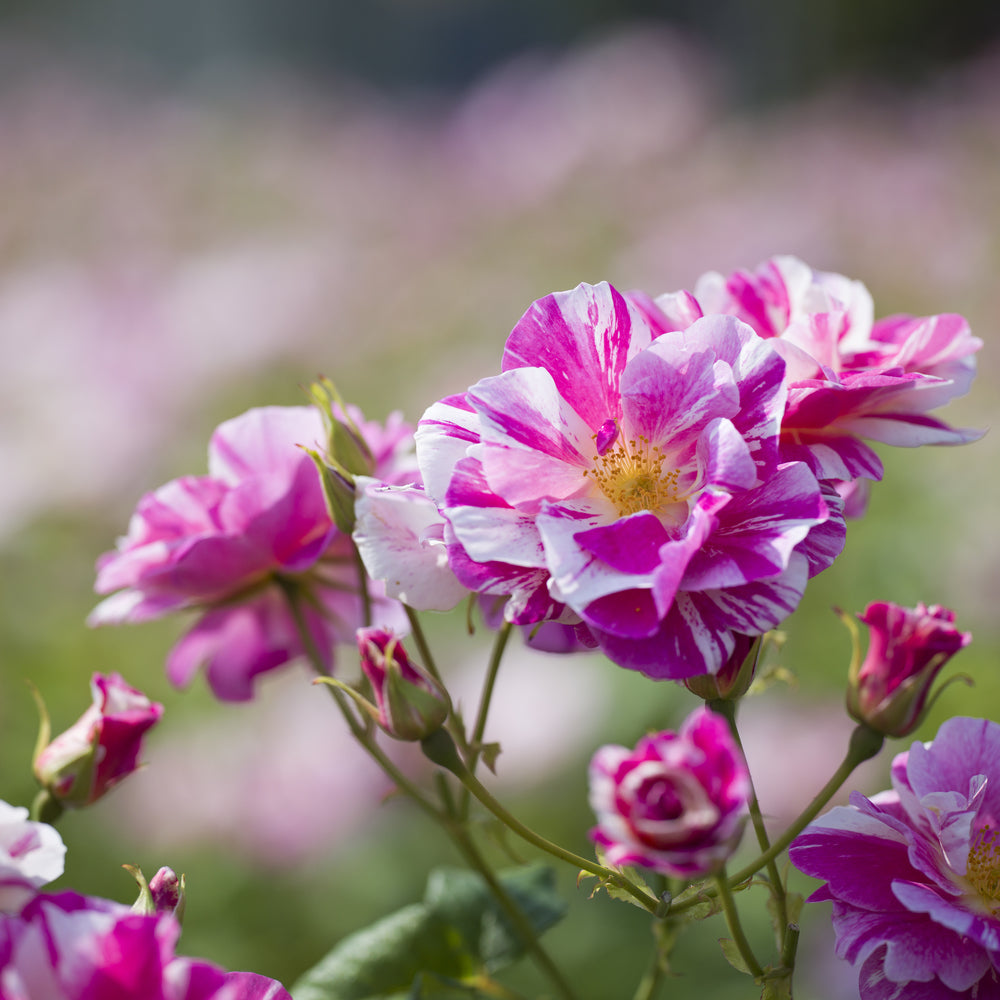
Every so often, a rose appears in our breeding fields that is quite unlike anything we have introduced before. The King's Rose is one such rose.
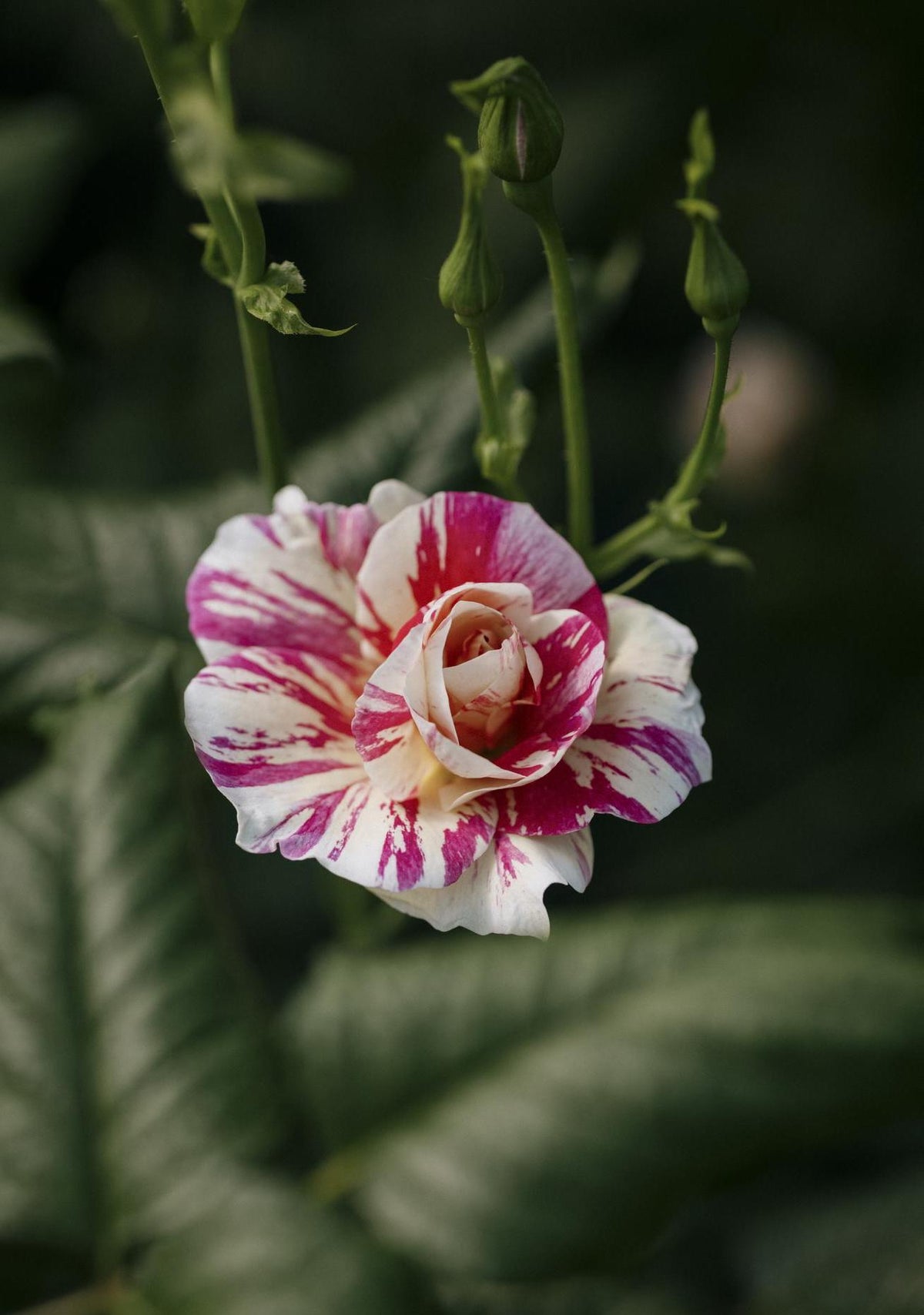
With flowers beautifully striped in shades of fuchsia pink and white, it is the first striped English Rose to be introduced by David Austin. Named in honour of His Majesty King Charles III, it made its debut at the RHS Chelsea Flower Show in 2025 and now begins a new chapter in gardens across America.
A Story That Began With a Shared First Rose
The story behind The King's Rose reaches back more than thirty years, to the RHS Chelsea Flower Show in the early 1990s.
It was there that our late Chairman, David J.C. Austin, son of our founder David C.H. Austin, met the then Prince of Wales. During their conversation, they discovered a rather lovely coincidence: the first rose each had grown in his own garden was the very same variety.
That rose was 'Ferdinand Pichard', an old striped rose whose crimson and pink flowers are irregularly marked with paler streaks.
It was one of those small connections that remained in the memory.
Many years later, while walking through our trial fields in Shropshire, David noticed a promising seedling. Its flowers were quite distinctive, each one marked with soft, painterly stripes. Season by season, as the young rose continued to prove itself, that long-ago conversation returned to him.
There seemed something particularly fitting about naming this rose for His Majesty, reflecting his longstanding interest in gardening, the natural world and our horticultural heritage.
Twelve Years in the Making
A new English Rose is the result of considerable patience.
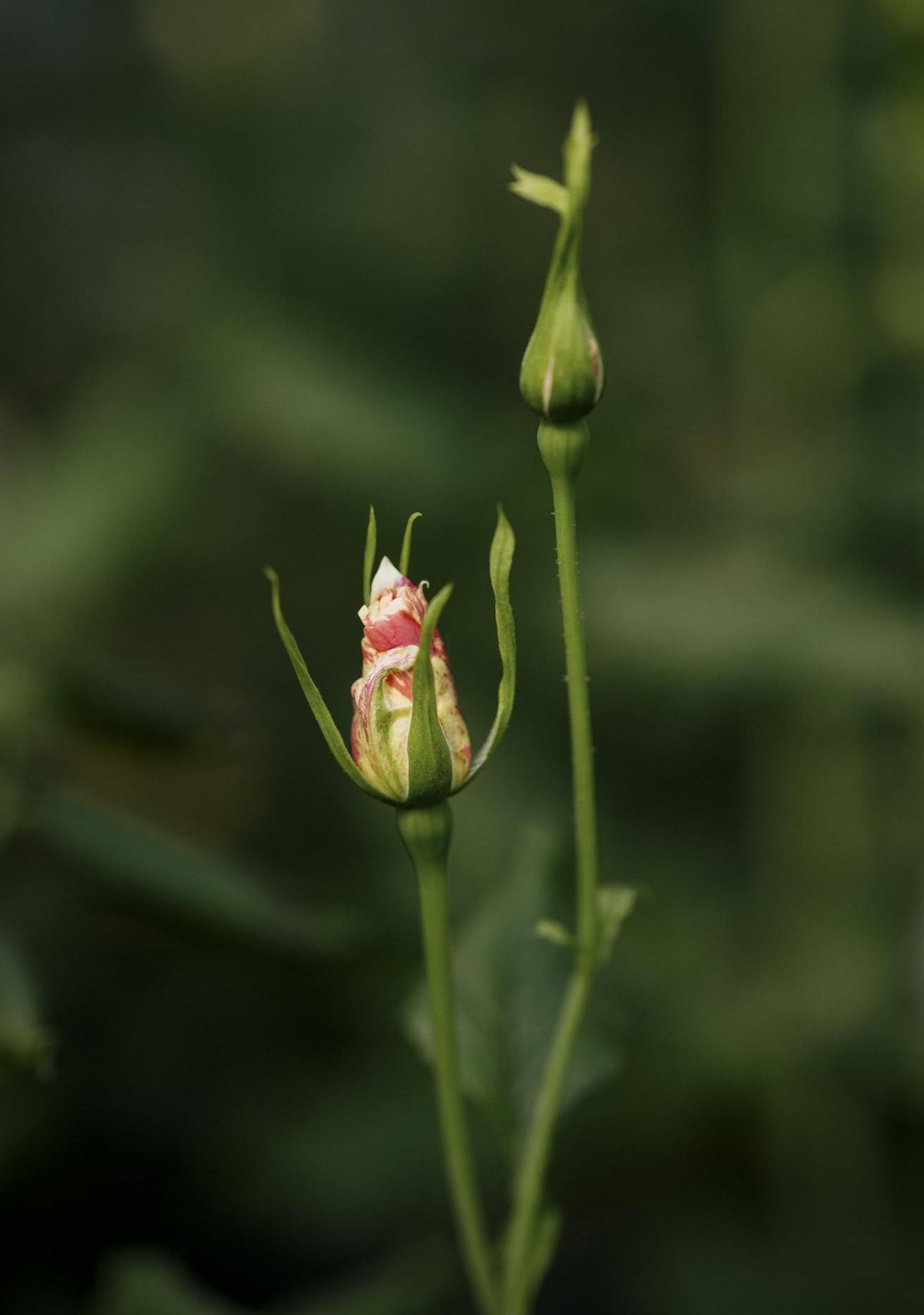
From the first careful cross-pollination to a rose being ready for gardens usually takes around twelve years. During that time, thousands of seedlings are grown and observed, each assessed for beauty, fragrance, health and, importantly, how well it performs in the garden.
Very few complete the journey.
A striped rose presents an additional challenge. The markings must retain their character reliably from plant to plant and season to season, while the rose must possess all the other qualities we look for in an English Rose.
The King's Rose did just that.
Stripes, Scent and Abundance
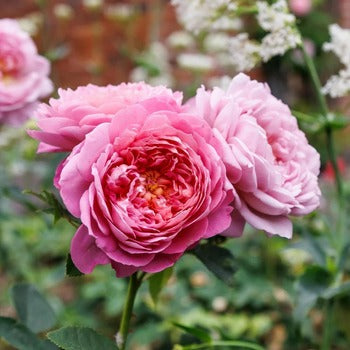
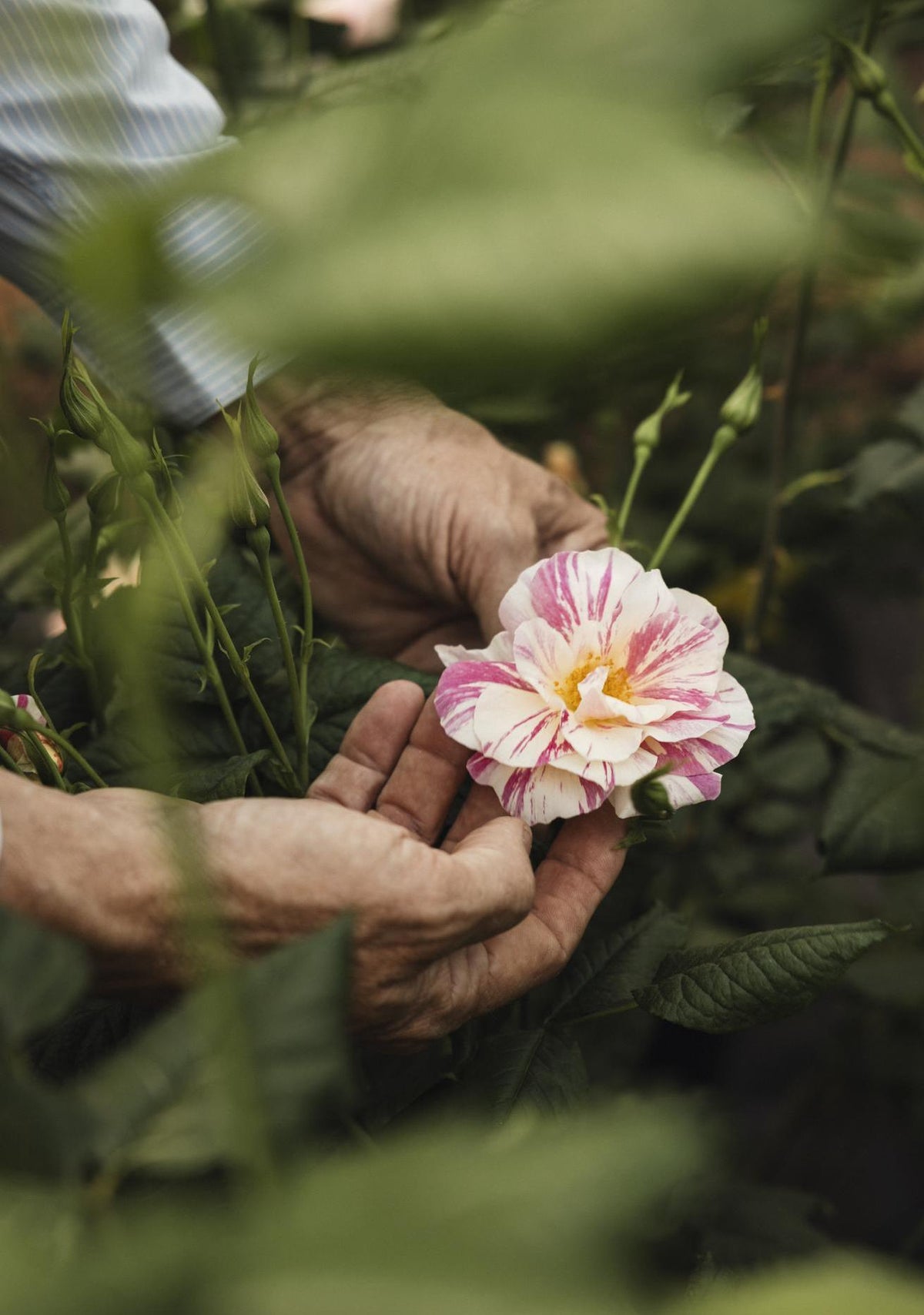
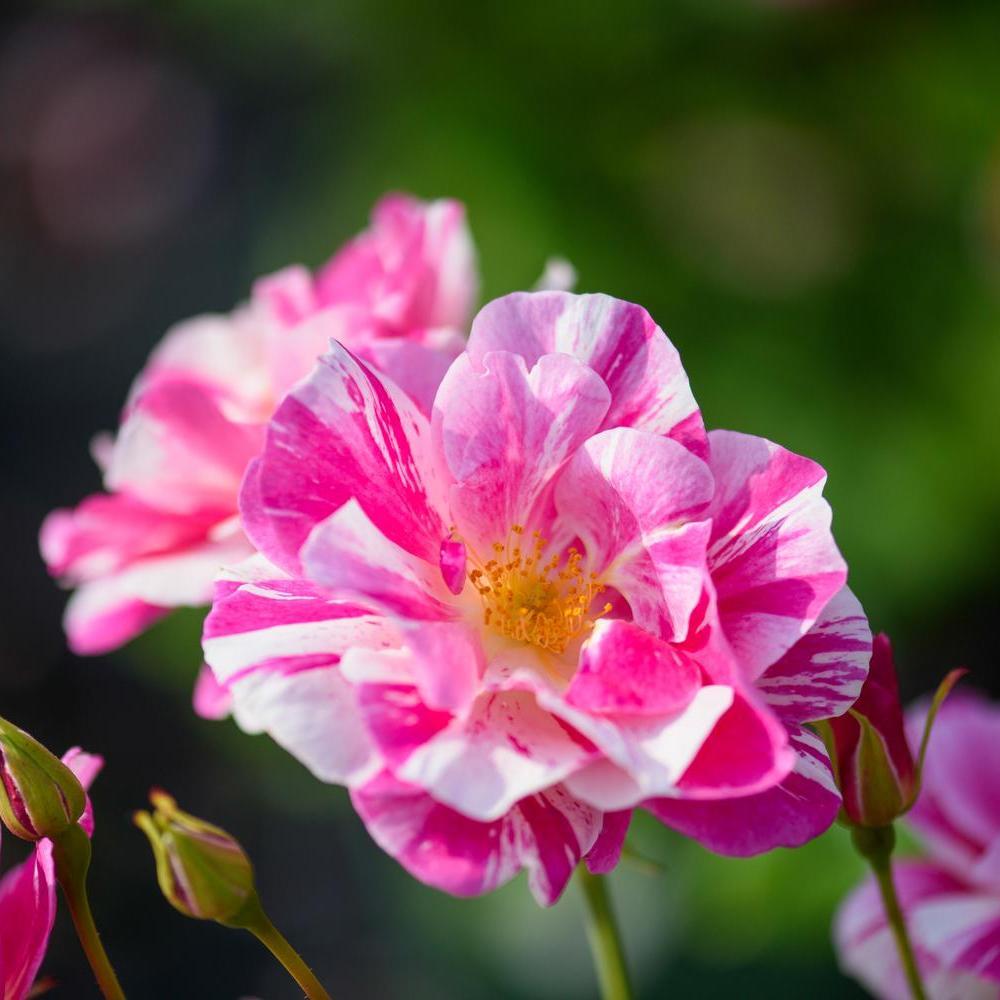
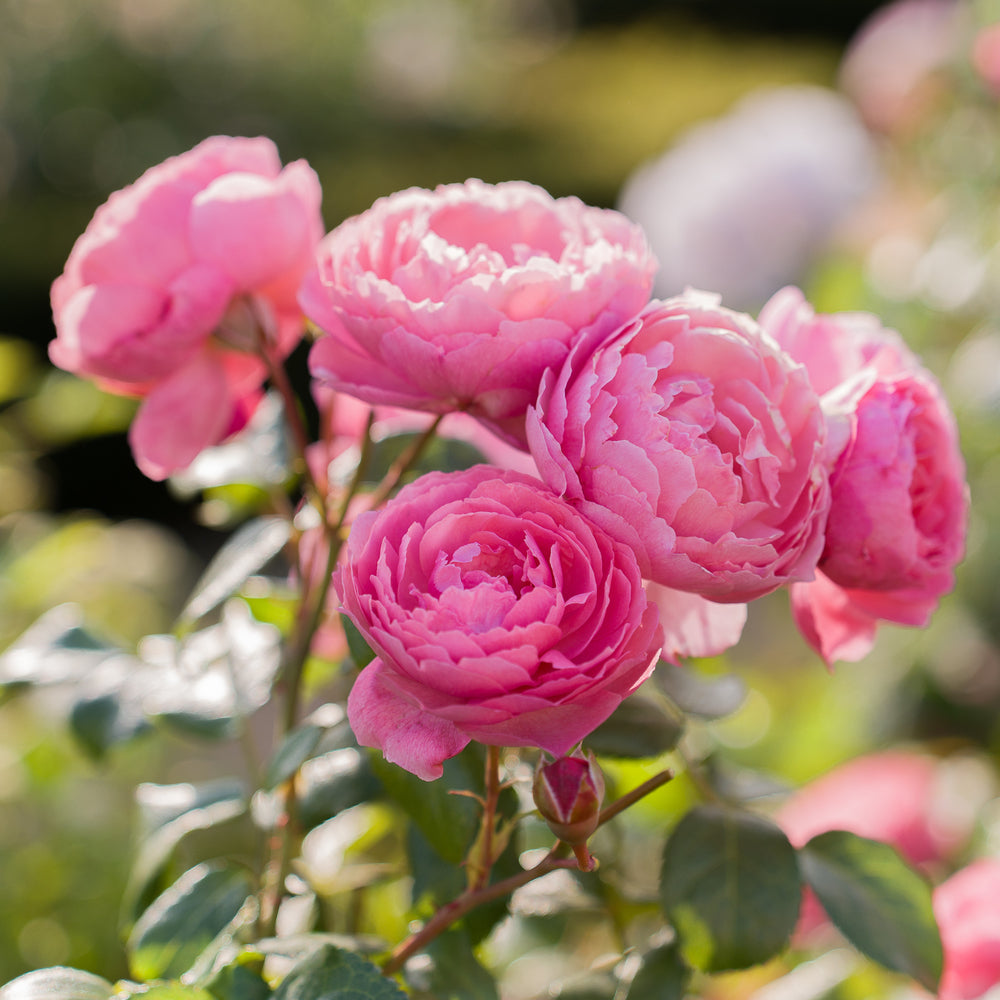
Perhaps the most beguiling quality of The King's Rose is its flowers. Each semi-double bloom is freely splashed and striped with vivid fuchsia pink and white, as though touched with a watercolour brush. No two are ever quite alike. At their centres, golden stamens remain clearly visible, lending the flowers a pleasingly informal character.
There is something of the old Gallica roses in their appearance, yet the plant has the vigour and repeat flowering we expect of a modern garden rose.
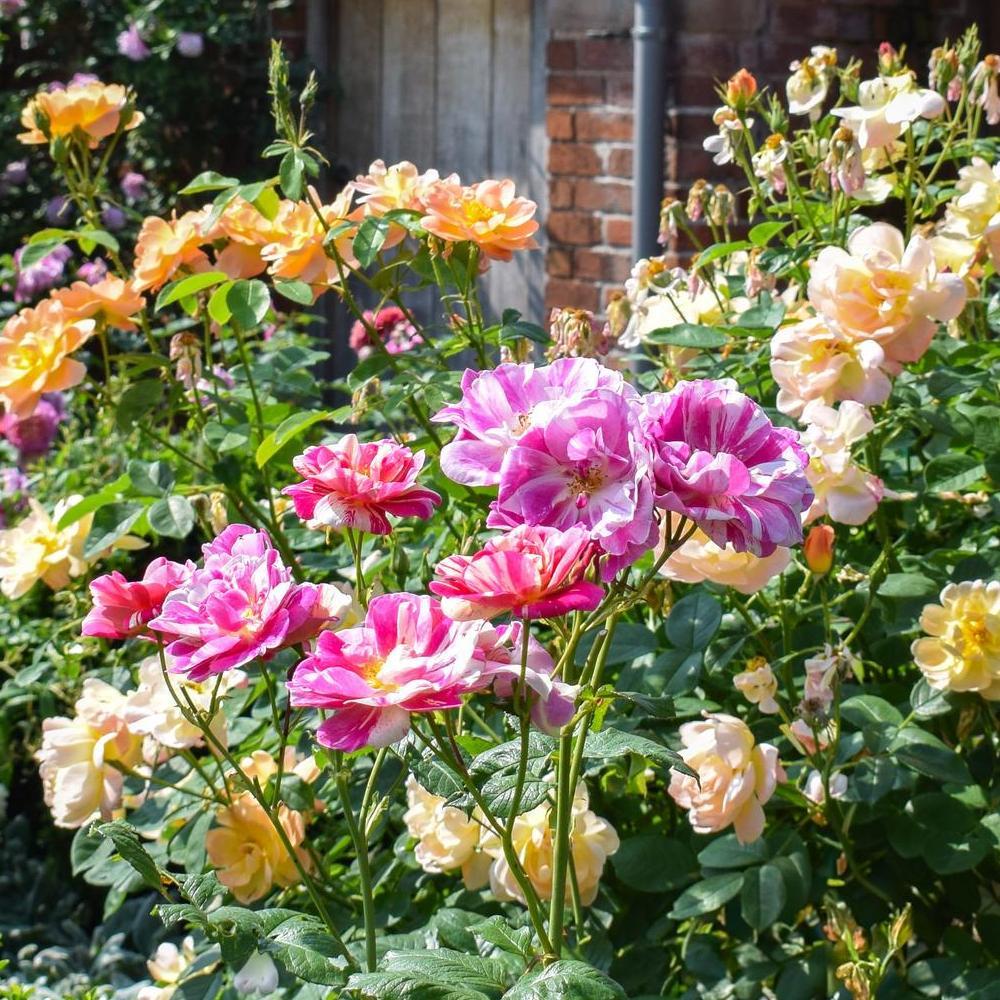 Flowers in abundance.The King's Rose flowers with remarkable generosity. Stems can carry at least 20 buds, creating a wonderfully abundant display, with further flushes appearing from late spring into autumn / early winter, depending on climate.
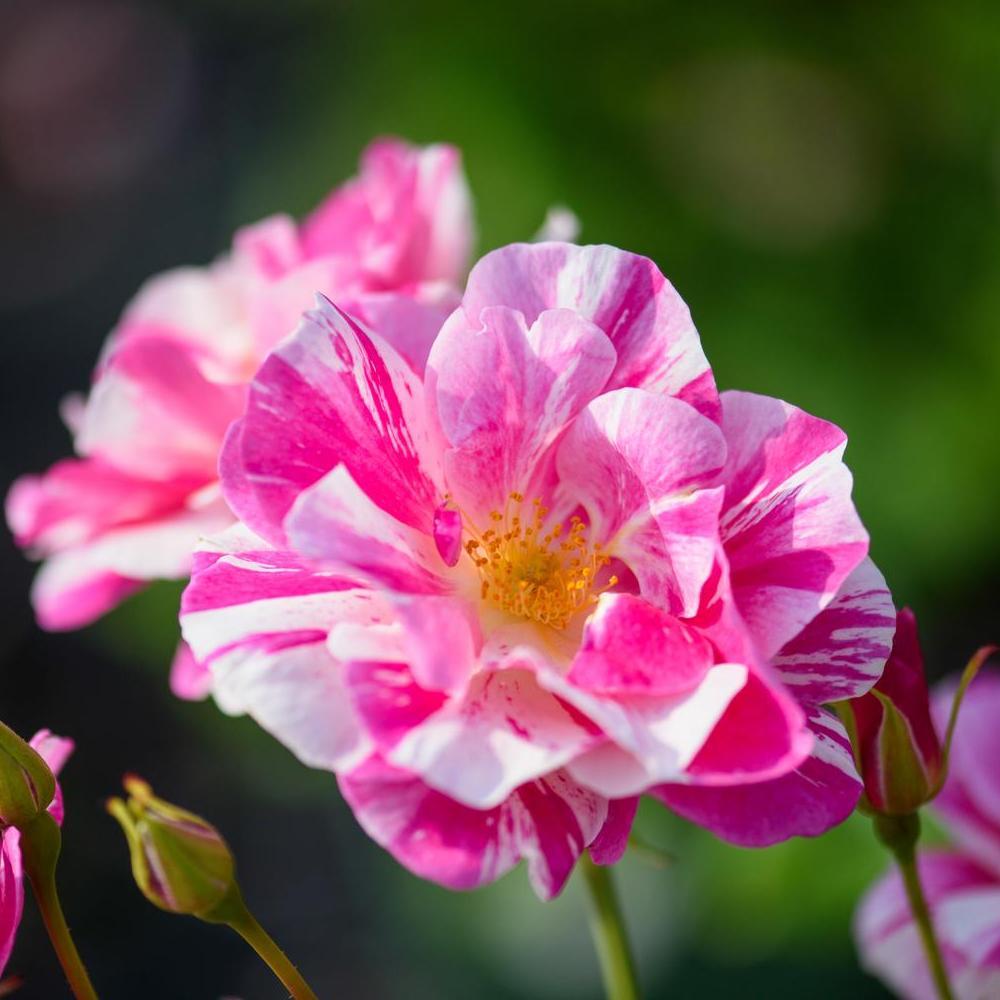 A delicate fragrance.Its light to medium musk fragrance reveals notes of crisp red apple and rosewater, followed by a gentle warmth reminiscent of clove.
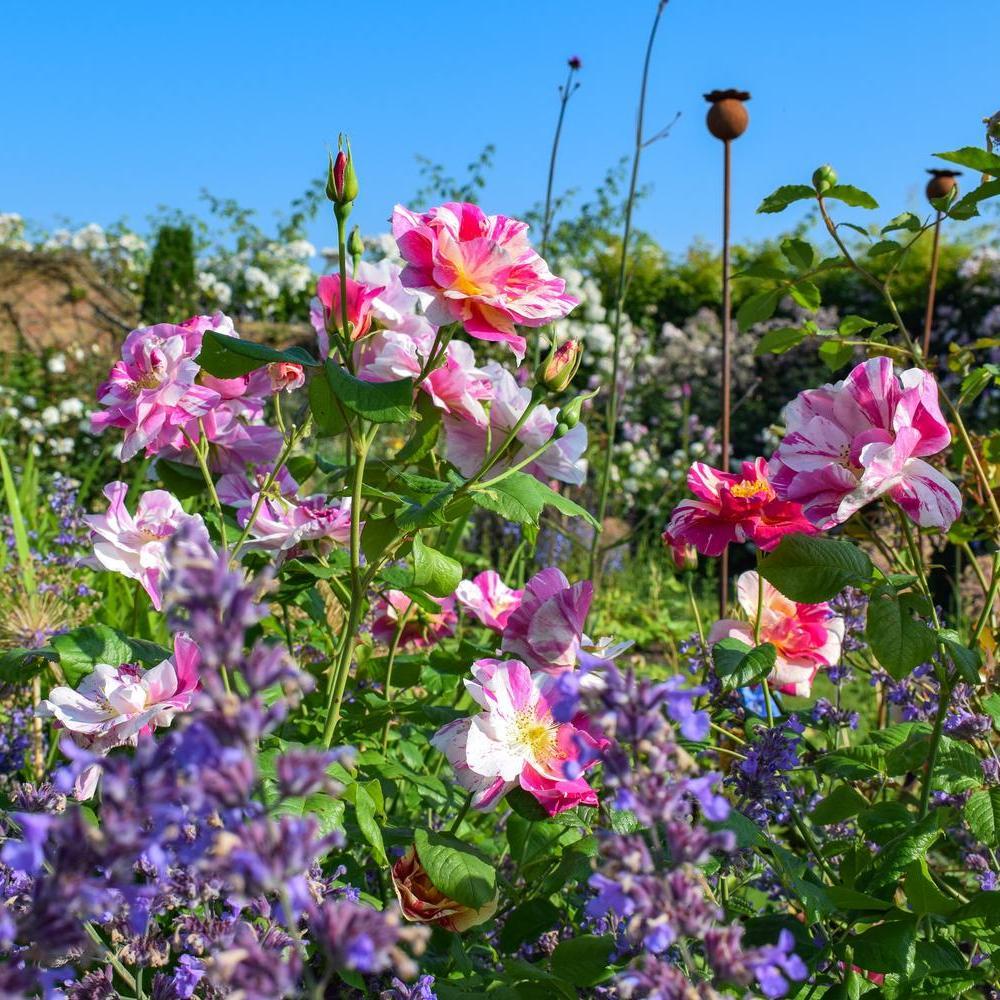 Graceful foliage and form.The plant forms a naturally elegant, vase-shaped shrub, clothed in attractive heart-shaped foliage, and reaches approximately 4ft tall by 3ft wide (125cm x 100cm).

The King's Rose has charms beyond its flowers.
Its open, semi-double blooms leave the golden stamens wonderfully accessible to bees and other visiting pollinators. On a warm summer's day, this can bring a gentle sense of life and movement to the planting.
Later, as flowering draws to a close, small hips develop and gradually colour to warm orange. If left on the plant, these can provide a useful source of food for birds during the colder months.
For those wishing to make a garden a little more welcoming to wildlife, it is a particularly pleasing rose to grow.
Hardiness and climate. The King's Rose is well suited to growing across all USDA Zones, making it a wonderfully versatile choice for gardens throughout America.
Health. It has shown strong disease resistance and has an easy, healthy manner of growth.
Where to plant. A position receiving at least four to six hours of sunlight each day, with well-drained soil, will suit it well. In the warmest parts of the country, some protection from the strongest afternoon sun may help the flowers retain their freshness for longer.
When to plant. Bare root roses are planted during their dormant season, generally from late winter into early spring in many parts of the country. Potted roses offer rather more flexibility and can be planted through much of the growing season, provided periods of extreme heat or frozen ground are avoided.
Care. Water deeply and regularly during the first growing season while the roots become established. A generous mulch will help conserve moisture and keep the root area cool. Feed in spring as growth begins and once more after the first flush of flowers to encourage further flowering.
The distinctive colouring of The King's Rose offers all sorts of possibilities in the garden.
Planting three together creates a particularly lovely effect. Seen from a little distance, the many pink-and-white flowers mingle into a richly textured display. Viewed more closely, the individual markings of each bloom become apparent.
Its informal flowers sit very naturally among the softer planting of a cottage garden, but the same distinctive colouring can be equally effective in a simpler, more contemporary scheme.
Pink and white also make this an unusually useful rose for bringing different colours together. Soft blues and mauves make especially sympathetic companions.
Catmint (Nepeta) can form a hazy skirt beneath the shrub, while blue and purple salvias provide slender spires among the flowers. Alliums bring their sculptural globes earlier in the season, and hardy geraniums such as 'Rozanne' make excellent, long-flowering ground cover.
Echinacea is another pleasing companion later in summer, extending both the season of interest and the welcome offered to pollinating insects.
There is no need for a large garden. A single plant, given room to develop its naturally graceful shape and surrounded by lower-growing perennials, can make a beautiful specimen in a smaller space.
There is something quietly pleasing about the journey of The King's Rose.
It began, in a sense, with two gardeners discovering that they had once chosen the same rose. More than thirty years later, that chance conversation found an echo in a striped seedling growing in the fields at Albrighton.
Today, The King's Rose brings together something old and something new: the character and individuality of historic striped roses, together with the health, repeat flowering and garden performance of a modern English Rose.
And perhaps that is part of its particular charm. Every flower is a little different from the last, ensuring there is always something new to notice when one wanders out into the garden.

-
The King's Rose: Our First Striped English Rose, Named in Honour of King Charles IIIEvery so often, a rose appears in our breeding fields that is quite unlike anything we have introduced before. The King's Rose is one such rose. With flowers beautifully striped in shades of fuchsia pink and white, it is the first striped English Rose to be introduced by David Austin. Named in honour of His Majesty King Charles III, it made its debut at the RHS Chelsea Flower Show in 2025 and now begins a new chapter in gardens across America.

-
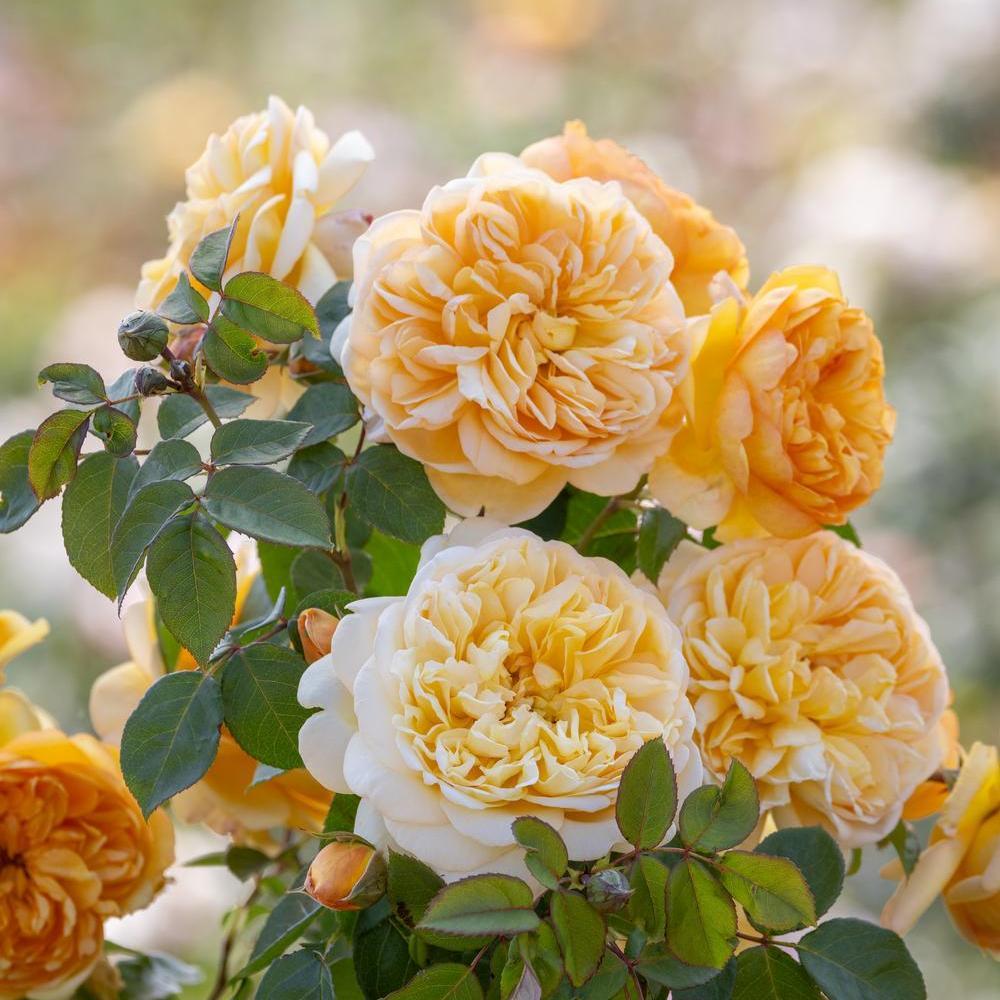
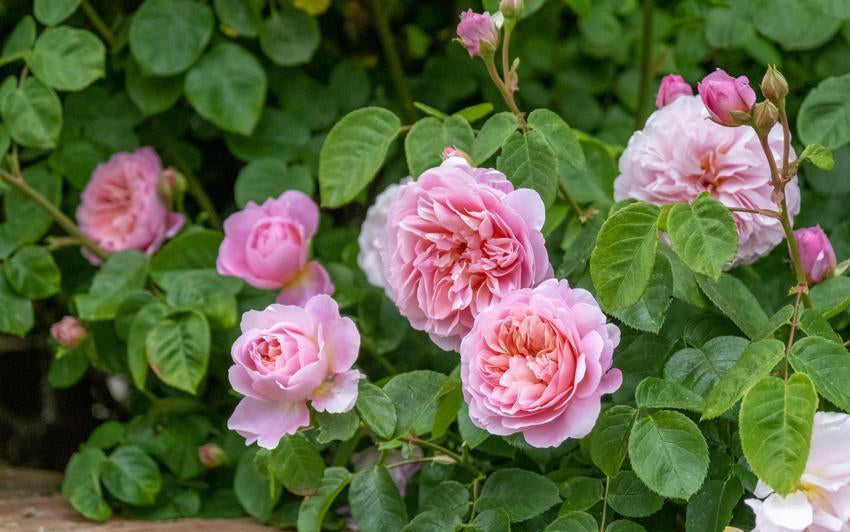
Roses with Large Blooms: Varieties for Garden ImpactA rose in full flower can transform a garden. Large, many-petalled blooms draw the eye through a border, bring colour to a quiet corner or create a beautiful focal point when grown in a pot.
-
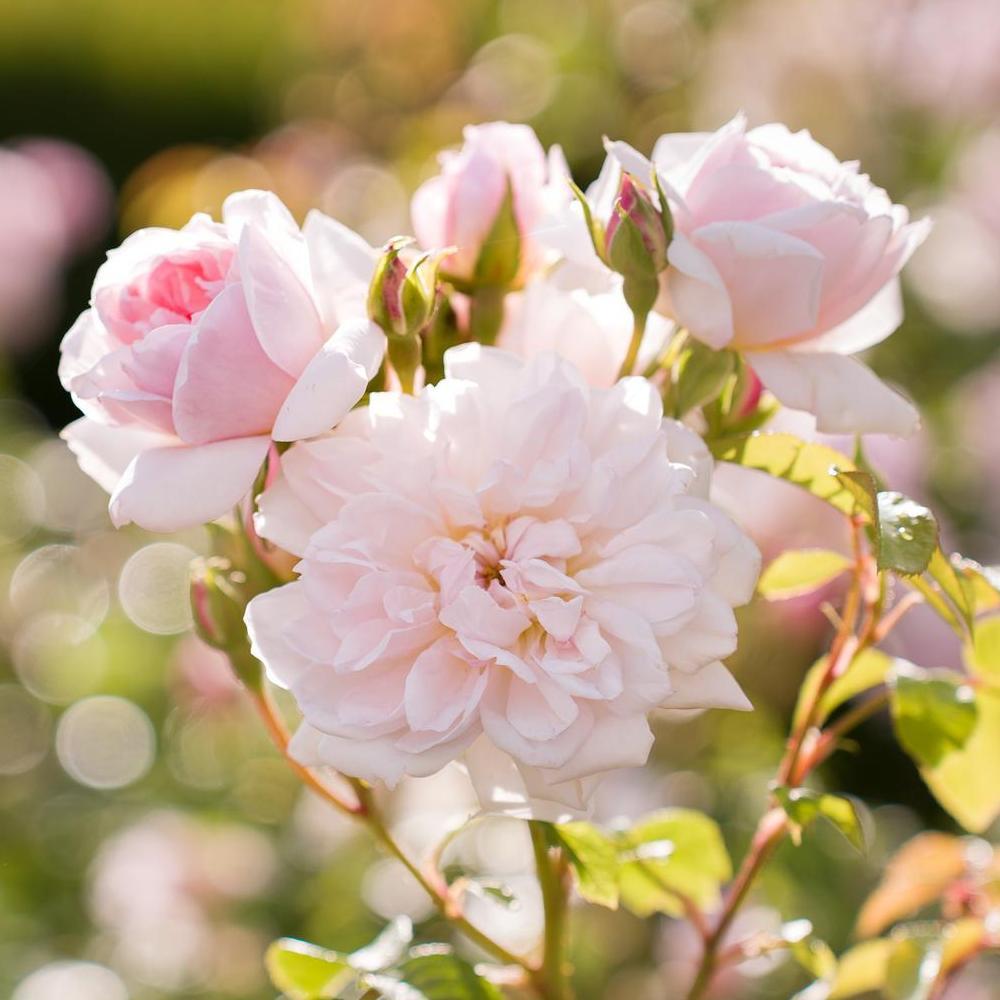
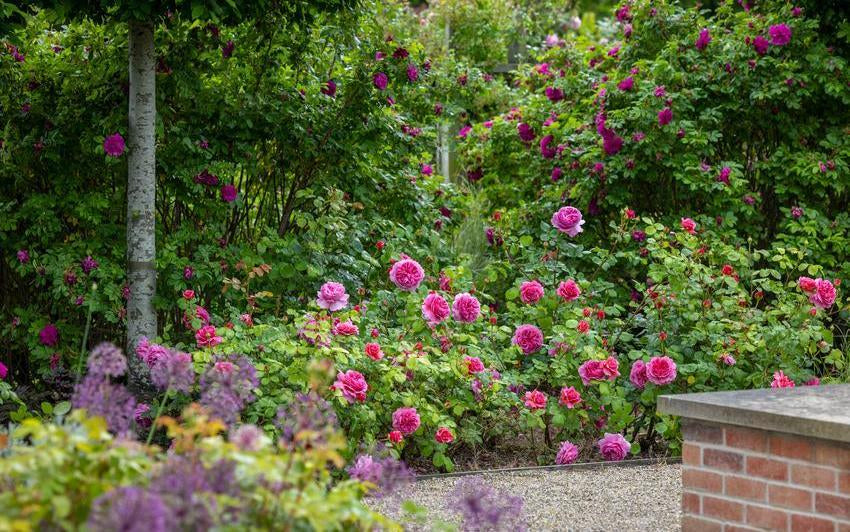
Best Fragrant Roses for Autumn: Scent and Colour Beyond SummerThe fragrance of a rose is never quite fixed. Temperature, humidity, time of day and even the stage of the flower can all influence how its scent is released and experienced. As the warmth of summer begins to soften into autumn, cooler mornings and greater moisture in the air create different conditions for fragrance, and a familiar rose can reveal itself in a rather different way.
-
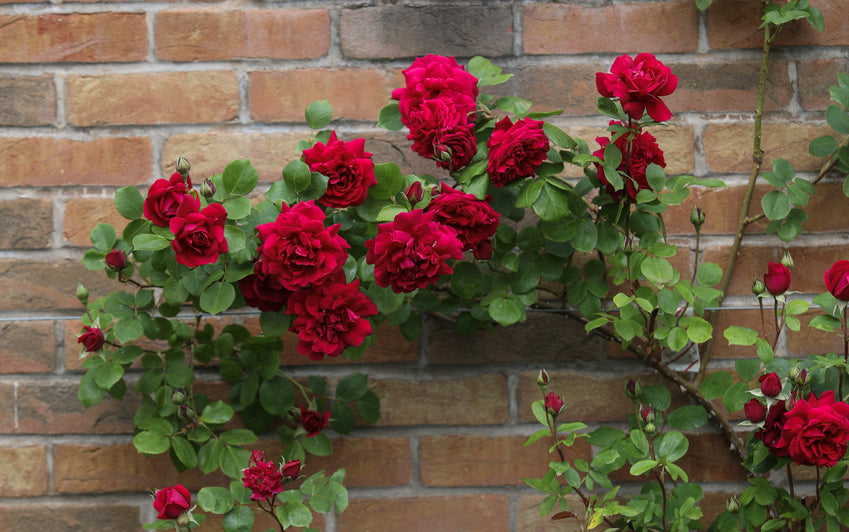
Using Red Roses to Bring Richness and Depth to the GardenA red rose has a wonderfully compelling presence in the garden. Amongst a sea of green, even a glimpse of crimson catches the eye, drawing you closer for another look. Red can sometimes have a reputation for being difficult to use, particularly alongside softer colours. Yet the palette is far more varied than we might first imagine. From clear crimson to deep, velvety tones, red roses can bring warmth, richness and depth to a garden without overwhelming it.
-
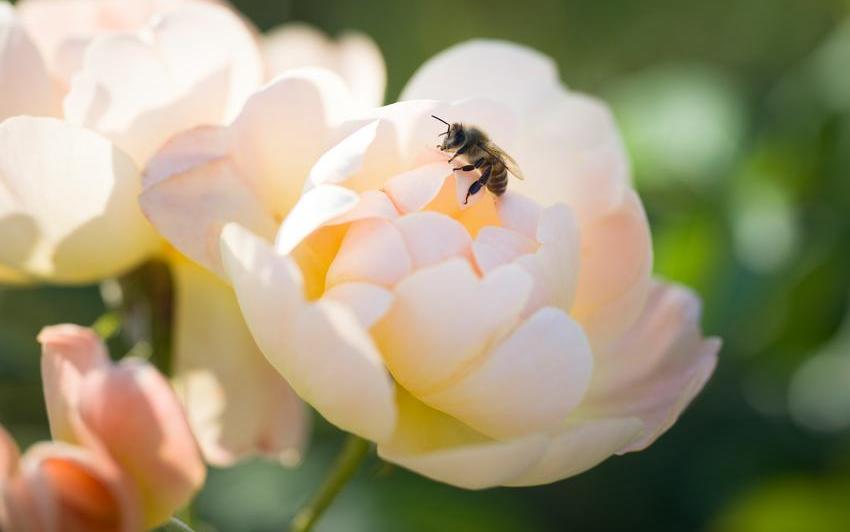
Roses for the Last Night of the PromsThere are few evenings quite like the Last Night of the Proms. Familiar melodies fill the Royal Albert Hall, the audience joins in and music heard and loved for generations is given fresh life once more. This year’s programme got us thinking about the curious connections between music, stories and the names of some of our roses. From Elgar and the Malvern Hills to Britain’s long relationship with the sea, each offers a thread to follow from the concert hall into the garden.
-
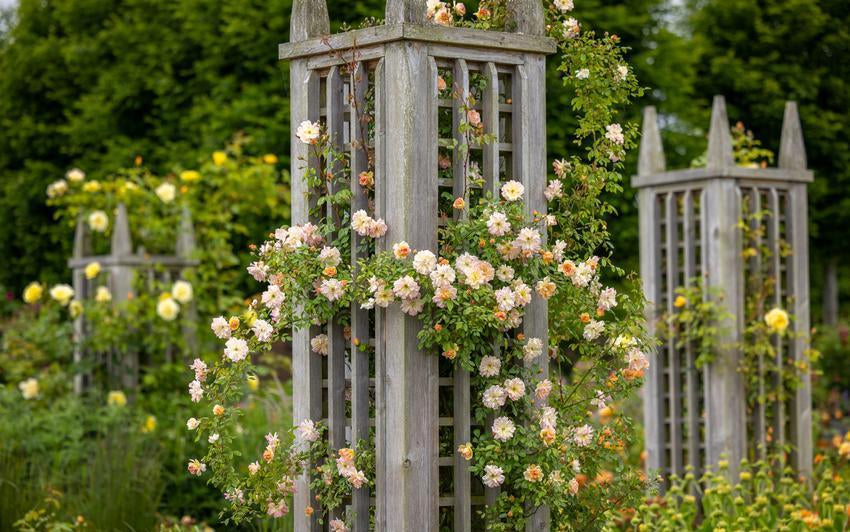
Climbing Roses for Arches, Obelisks and PillarsThere is always room for another rose. When borders are full, the answer is often simply to look upwards. Climbing roses can transform arches, obelisks and pillars into wonderfully abundant garden features, bringing flowers and fragrance to eye level and above. They can tumble over an entrance, rise from the middle of a border or soften a simple post with foliage and bloom. And, with the right rose and a little thoughtful training, they need surprisingly little ground space to make quite an impression.