
- Rose Budding
The Craft Behind Our Roses
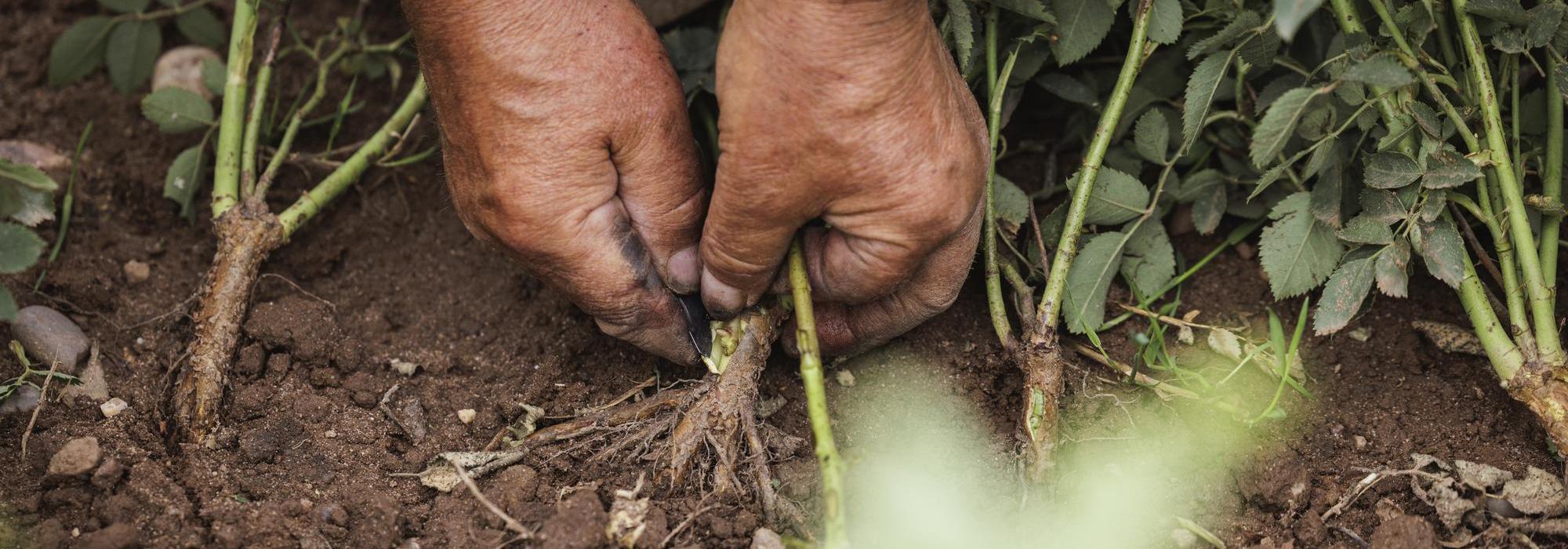
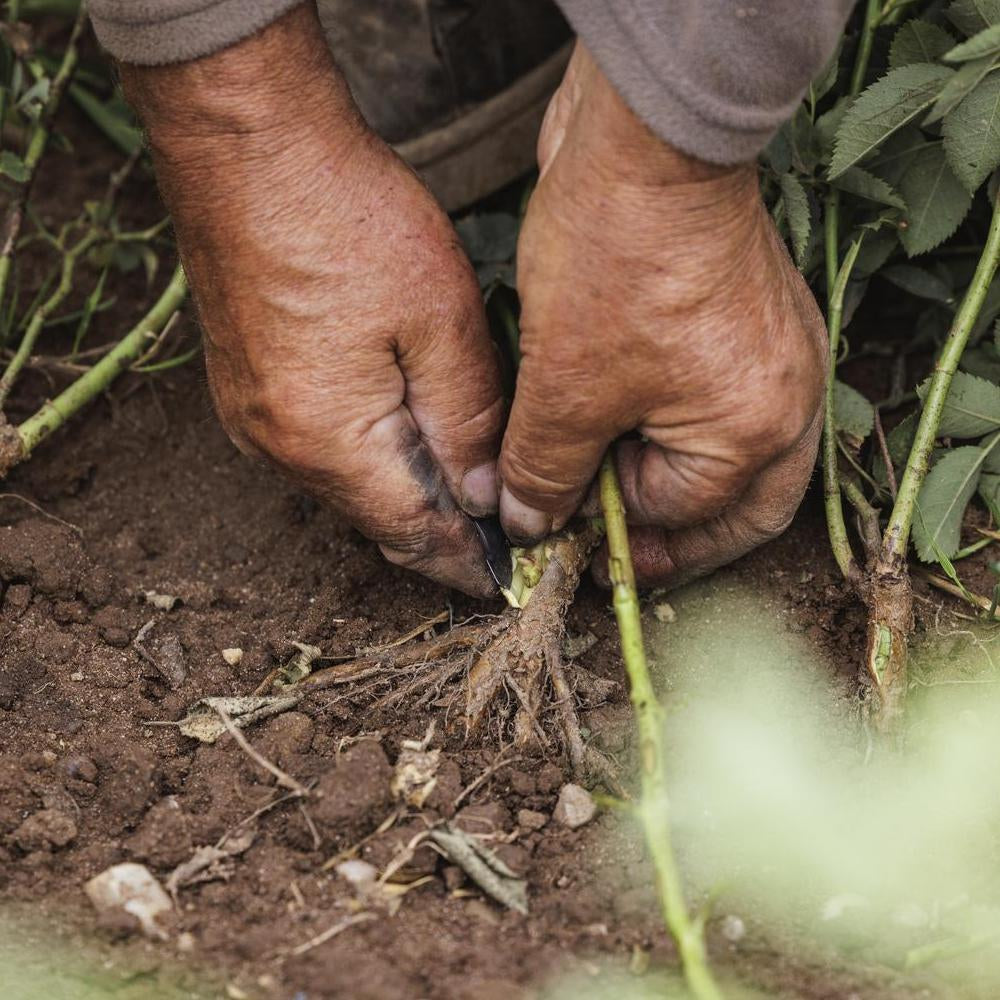
When you see a rose in full bloom, it is easy to think of it as a purely natural creation. What is less obvious is that every single one of our plants began life through a precise, manual process. Long before a rose reaches a garden centre or finds its place in your border, it passes through a critical production stage known as budding.
This traditional grafting method has changed very little over generations. Despite advances in modern farming machinery, it still depends entirely on human precision and skill.
The Summer Budding Season
Each summer, our production teams head into the fields where rows of young rootstocks are growing. Nearby, fresh stems of budwood are carefully harvested from healthy mother plants.
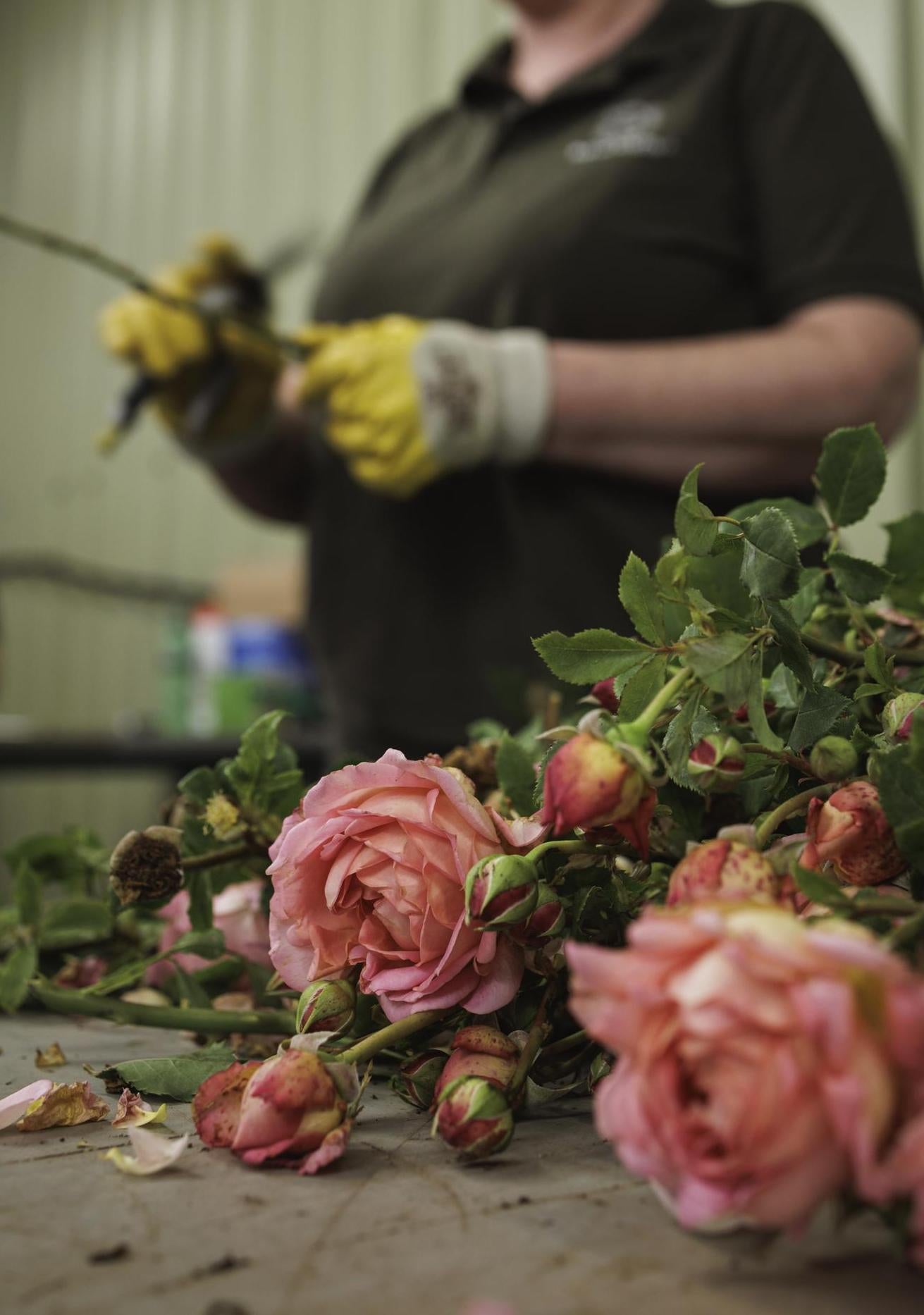
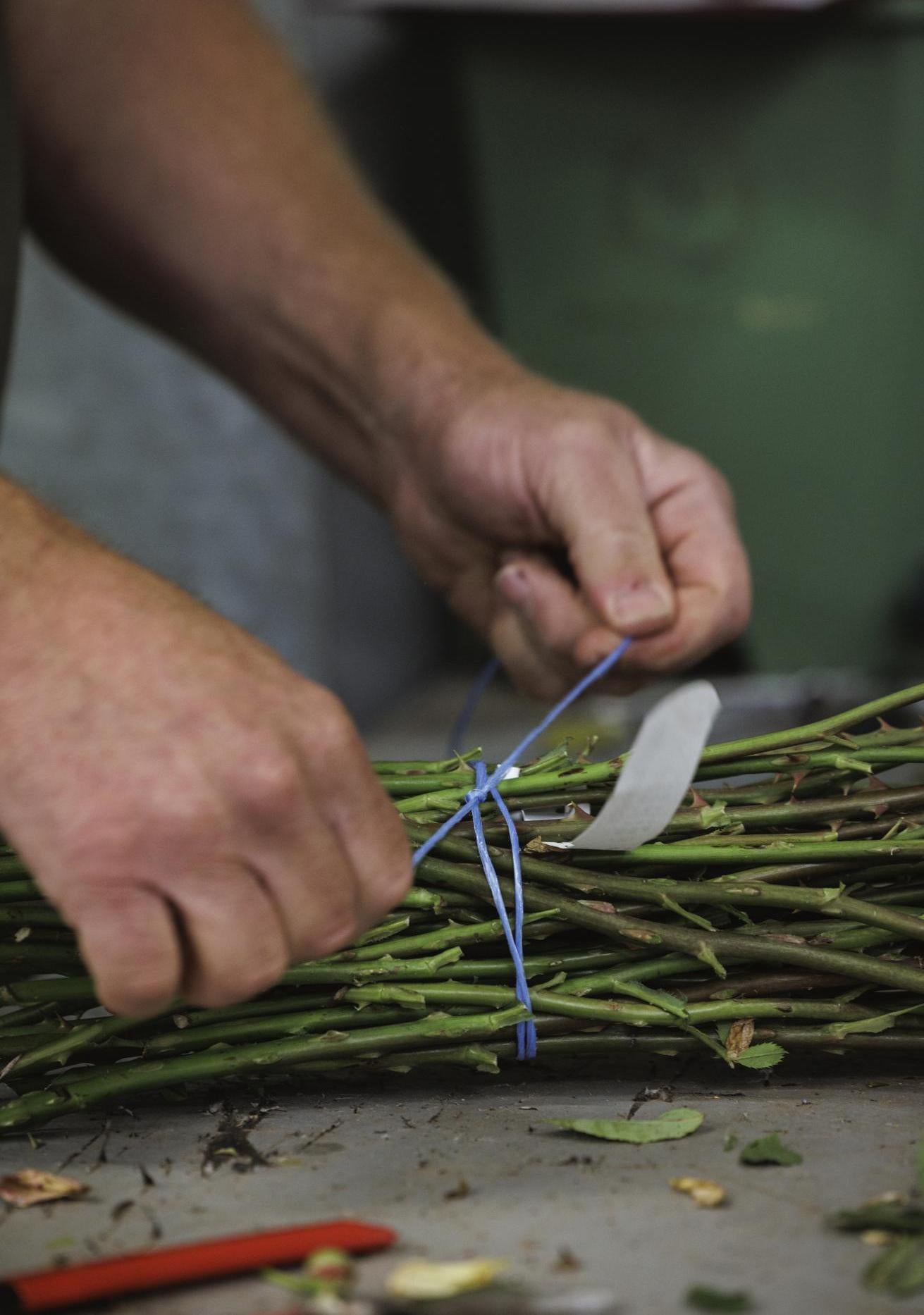
Timing is everything. Workers select these shoots at a specific stage of growth, choosing stems where the buds are perfectly primed to develop into strong new plants. Before reaching the fields, the leaves and thorns are stripped away so the stems can be handled safely, and the wood is kept cool to preserve it.
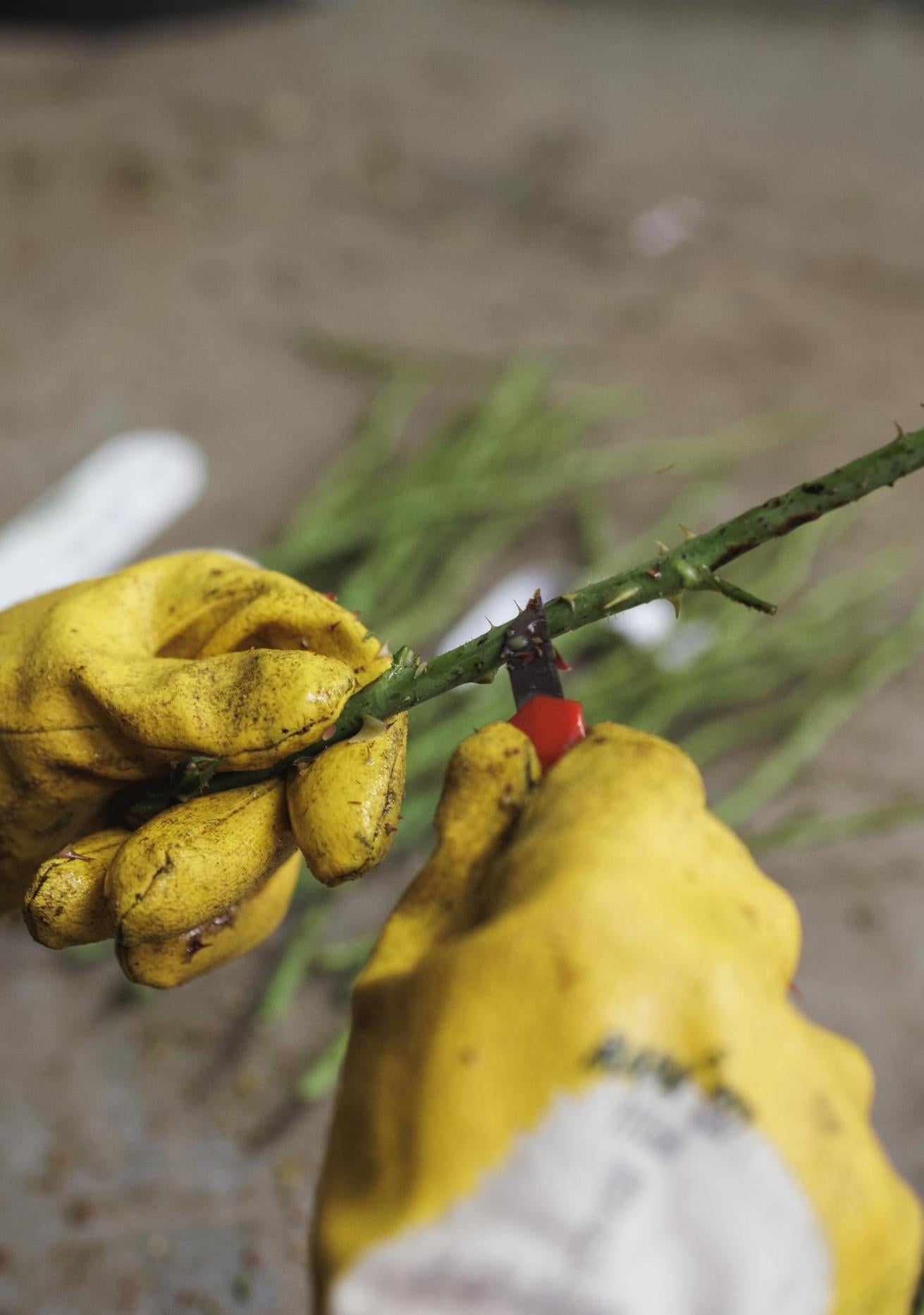
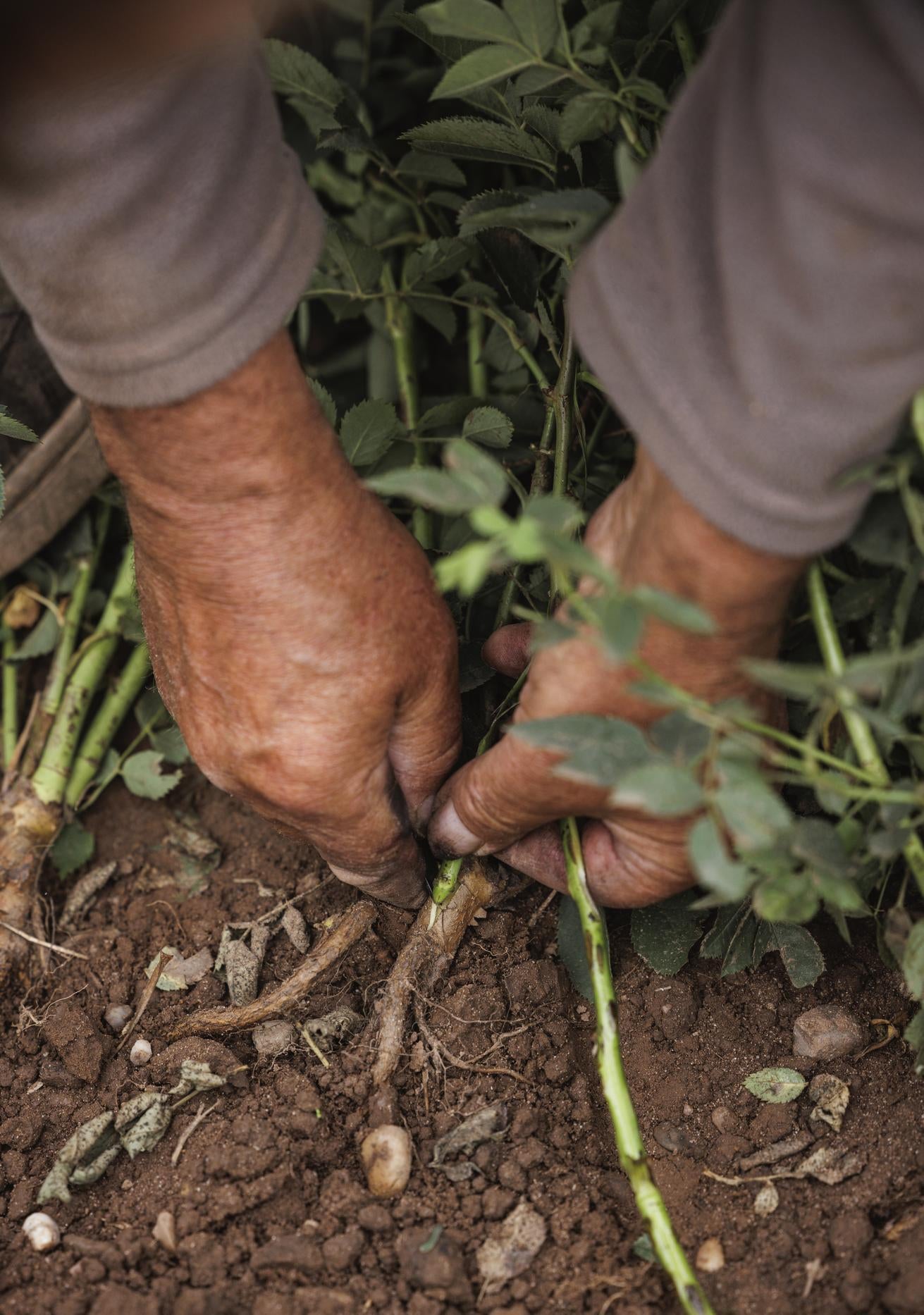
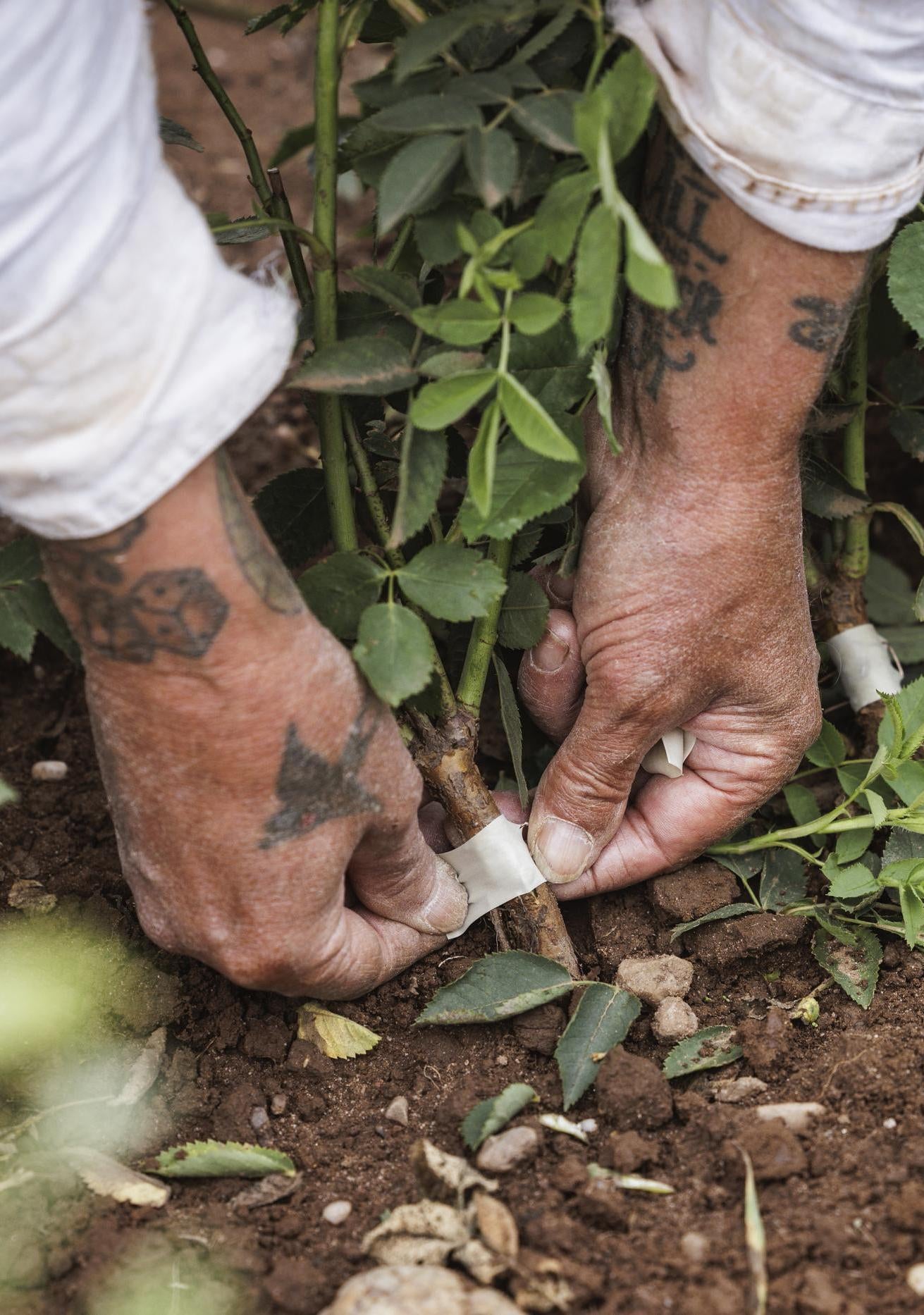
Once in the field, the precision work begins. Moving steadily down the long rows, a budder slices a single bud from the harvested stem. With a clean, quick cut, they create a small opening in the bark of the rootstock and slide the bud inside. A biodegradable patch is wrapped tightly around the join, securing the union while the two distinct plants begin to grow together.
While the process sounds simple, it is a specialised technical skill that requires years of daily practice to master.
A Craft Learned by Hand
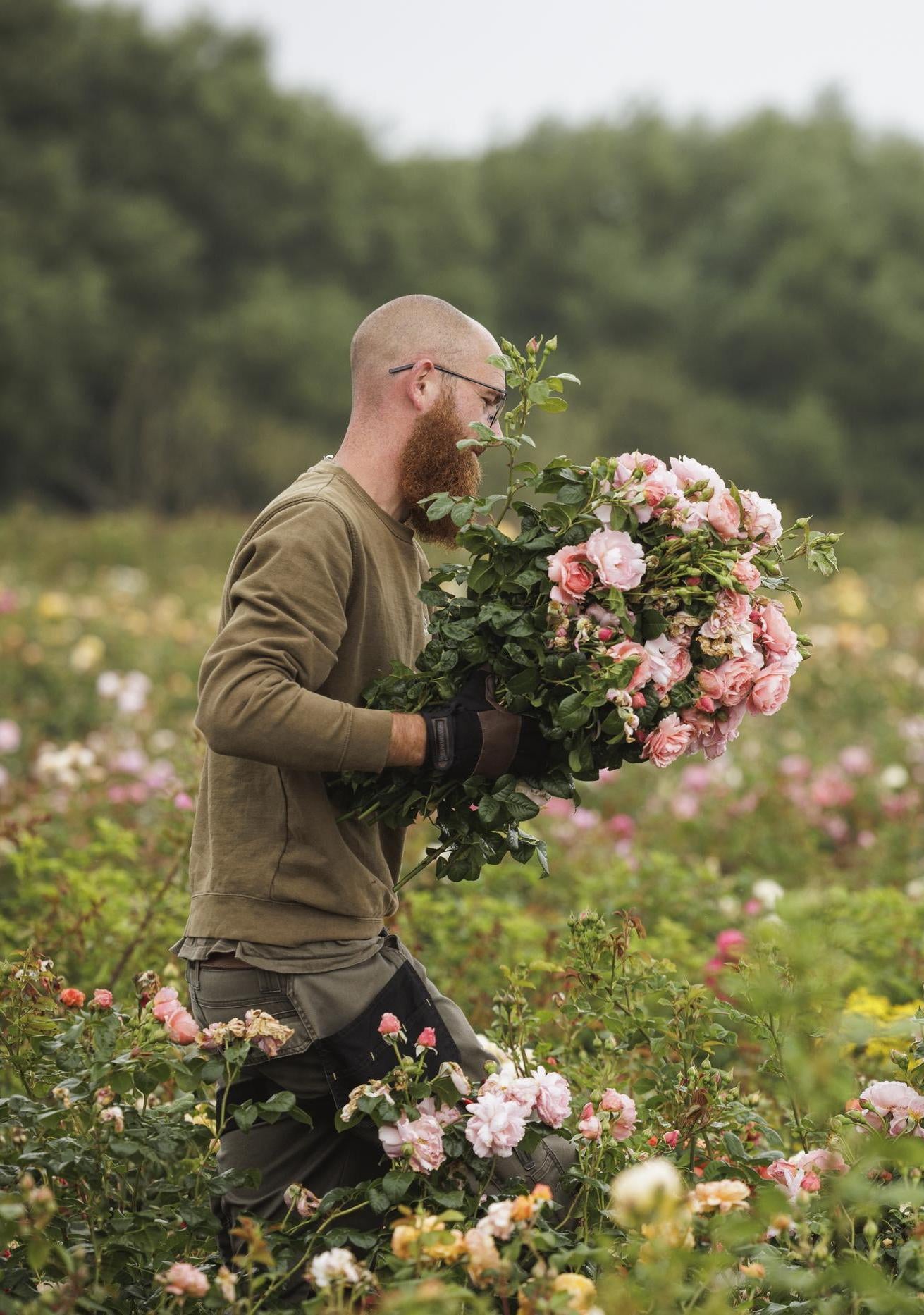
Budding cannot be automated. The process requires a level of touch and visual judgment that technology cannot replicate. Every cut must be perfectly clean to prevent infection, and every bud must be positioned precisely to ensure the graft takes.
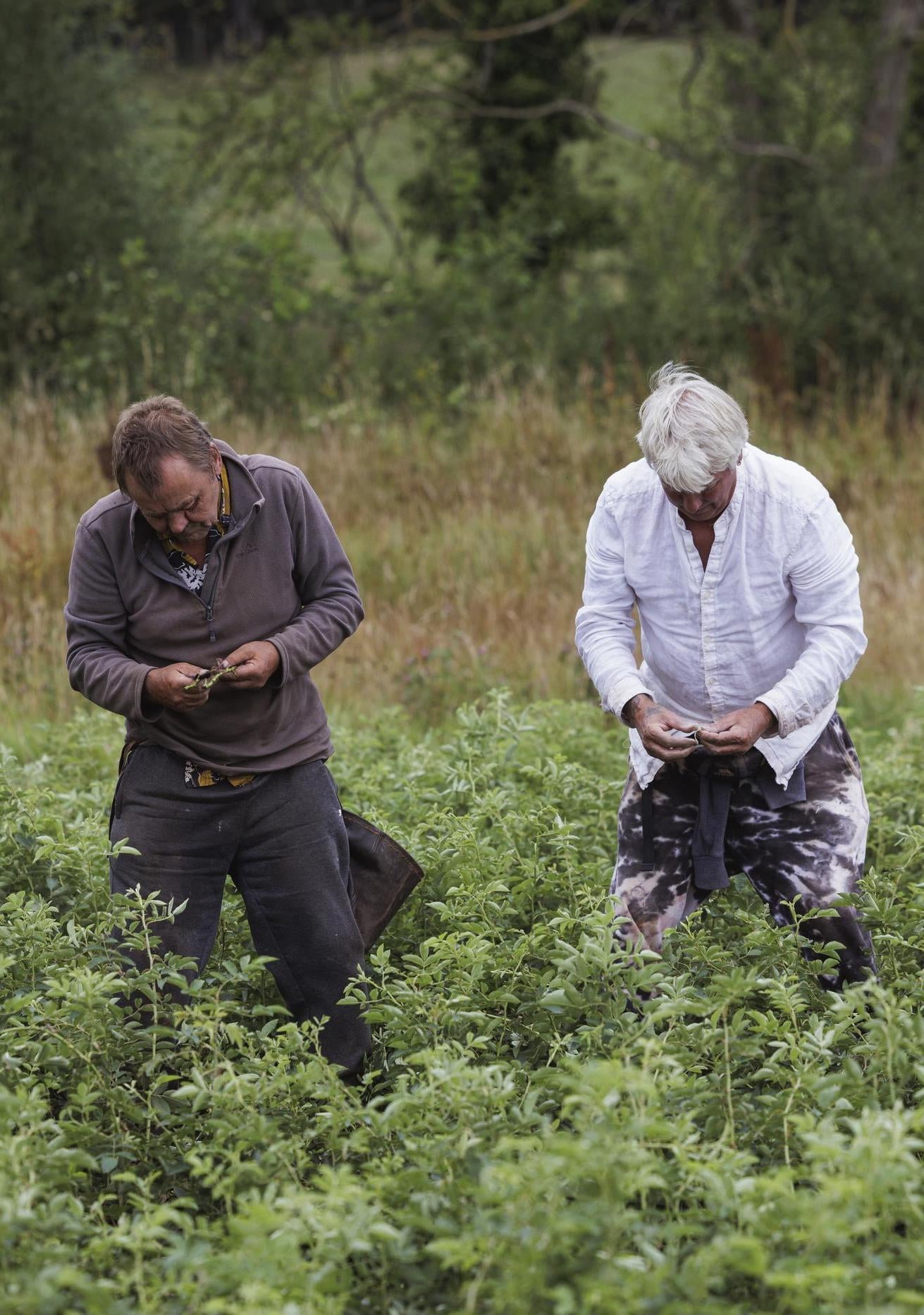
To maximise efficiency during the short summer window, field workers operate in pairs. One person cuts the rootstock and inserts the bud, while their partner follows immediately behind to seal the graft with a patch. Working in tandem, an experienced pair develops a fast, highly disciplined rhythm, capable of completing around 4,000 individual buds in a single day.
It is physically demanding work, requiring long hours outdoors in changing weather conditions. Heavy summer rain or sudden cold spells can cause the plant bark to tighten, making the precise cuts significantly harder to execute.
Fusing Strength and Variety
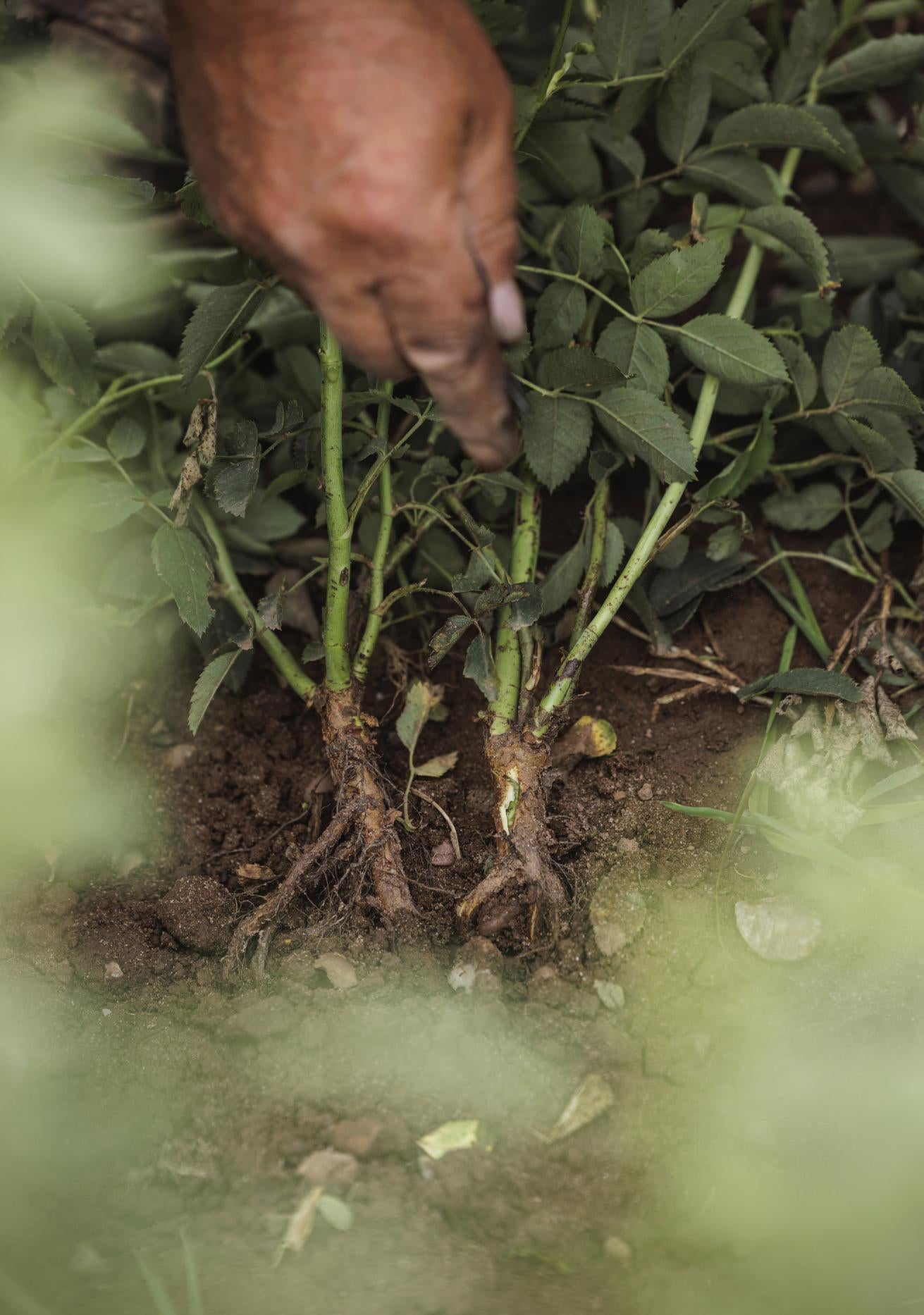
The purpose of budding lies in the biology of the graft. Although workers insert only a single bud into the stem, that tiny point of contact dictates the entire upper structure of the mature bush.
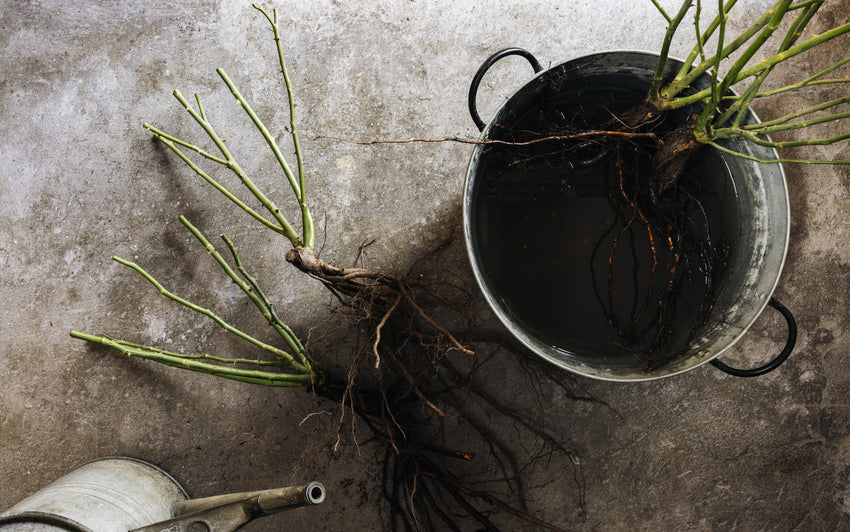
The underlying rootstock remains below ground, providing a rugged, disease-resistant root system that can tolerate a wide variety of garden soils. Meanwhile, the inserted bud carries the exact genetic blueprint of the specific David Austin® variety. It dictates the flower shape, fragrance profile, foliage colour, and growth habit of the rose.
The newly budded plants remain in the fields for several months. Over winter and through the following spring, they develop their root systems and push out their first major shoots before they are finally lifted, prepared, and shipped to gardens worldwide.
A Skill Worth Preserving
Finding and training skilled budders is a growing challenge in modern agriculture. This is a trade learned purely through physical repetition and on-the-job mentorship rather than from textbooks. New workers spend weeks observing experienced colleagues, repeating the exact movements until the accuracy becomes muscle memory.
Across Europe, fewer people are entering this type of specialised field profession each year, making skilled budders a rare group of craftspeople. Yet, their technical precision remains the essential link between rose breeding and commercial availability.
The next time you look at an established rose in your garden, remember that its history includes a steady pair of hands, a sharp knife, and a traditional craft passed down through generations.

-
The Rose Year BeginsFall brings a distinct richness that invites us to slow down and notice the changes. Leaves turn shades of amber and gold, while the lower, softer light catches the borders in the late afternoon. As cooler mornings bring heavy dew and that unmistakable, earthy scent of damp soil, the garden gradually settles down for the season.
-
Roses with Large Blooms: Varieties for Garden ImpactA rose in full flower can transform a garden. Large, many-petalled blooms draw the eye through a border, bring colour to a quiet corner or create a beautiful focal point when grown in a pot.
-
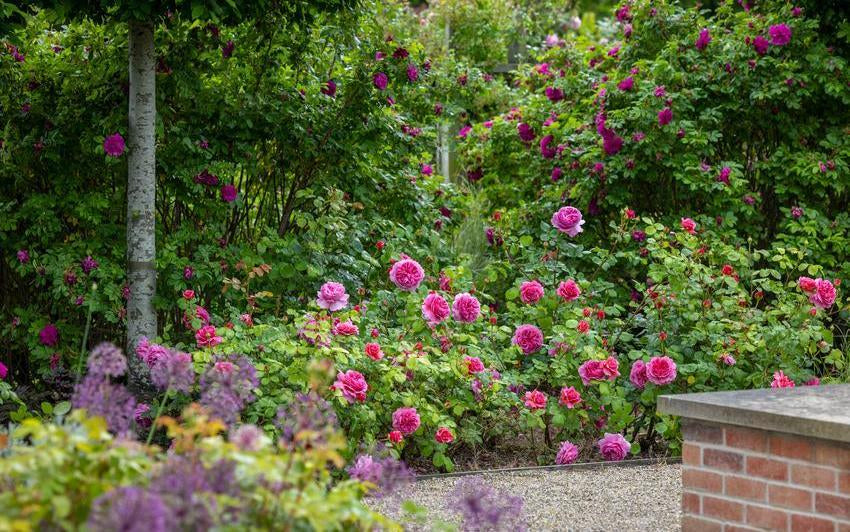
Best Fragrant Roses for Autumn: Scent and Colour Beyond SummerThe fragrance of a rose is never quite fixed. Temperature, humidity, time of day and even the stage of the flower can all influence how its scent is released and experienced. As the warmth of summer begins to soften into autumn, cooler mornings and greater moisture in the air create different conditions for fragrance, and a familiar rose can reveal itself in a rather different way.
-
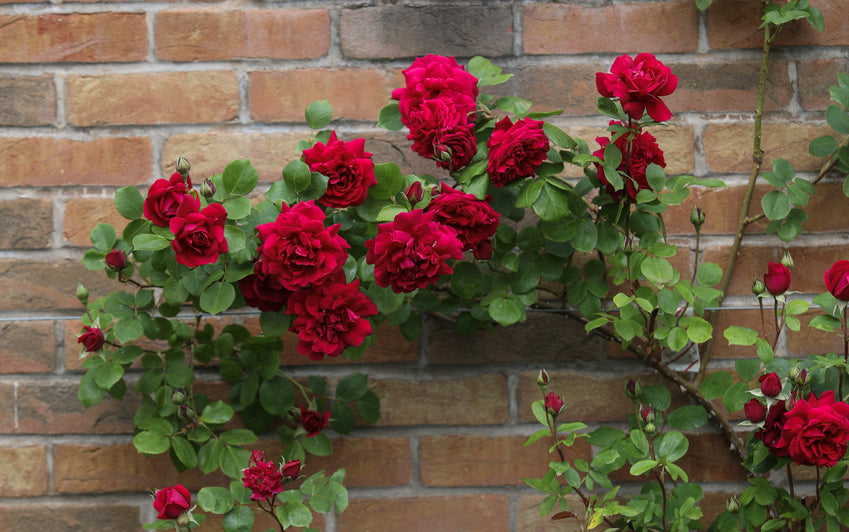
Using Red Roses to Bring Richness and Depth to the GardenA red rose has a wonderfully compelling presence in the garden. Amongst a sea of green, even a glimpse of crimson catches the eye, drawing you closer for another look. Red can sometimes have a reputation for being difficult to use, particularly alongside softer colours. Yet the palette is far more varied than we might first imagine. From clear crimson to deep, velvety tones, red roses can bring warmth, richness and depth to a garden without overwhelming it.
-
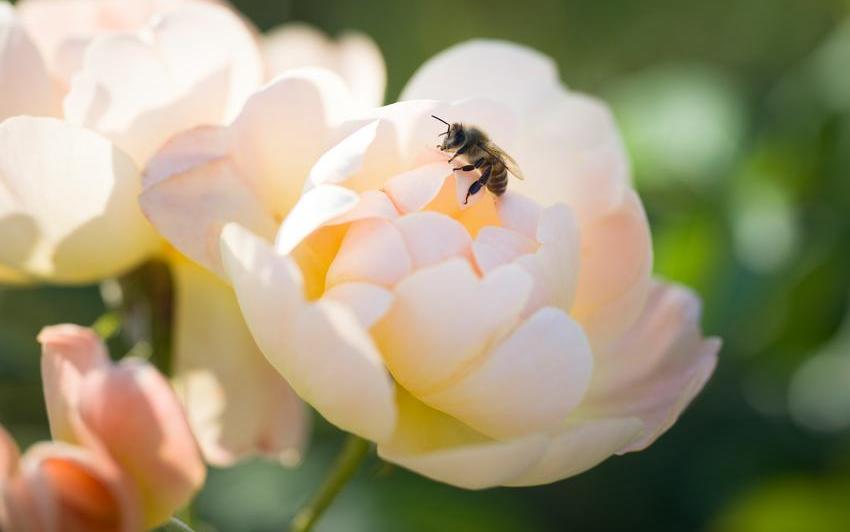
Roses for the Last Night of the PromsThere are few evenings quite like the Last Night of the Proms. Familiar melodies fill the Royal Albert Hall, the audience joins in and music heard and loved for generations is given fresh life once more. This year’s programme got us thinking about the curious connections between music, stories and the names of some of our roses. From Elgar and the Malvern Hills to Britain’s long relationship with the sea, each offers a thread to follow from the concert hall into the garden.
-
Climbing Roses for Arches, Obelisks and PillarsThere is always room for another rose. When borders are full, the answer is often simply to look upwards. Climbing roses can transform arches, obelisks and pillars into wonderfully abundant garden features, bringing flowers and fragrance to eye level and above. They can tumble over an entrance, rise from the middle of a border or soften a simple post with foliage and bloom. And, with the right rose and a little thoughtful training, they need surprisingly little ground space to make quite an impression.