

Using Red Roses to Bring Richness and Depth to the Garden
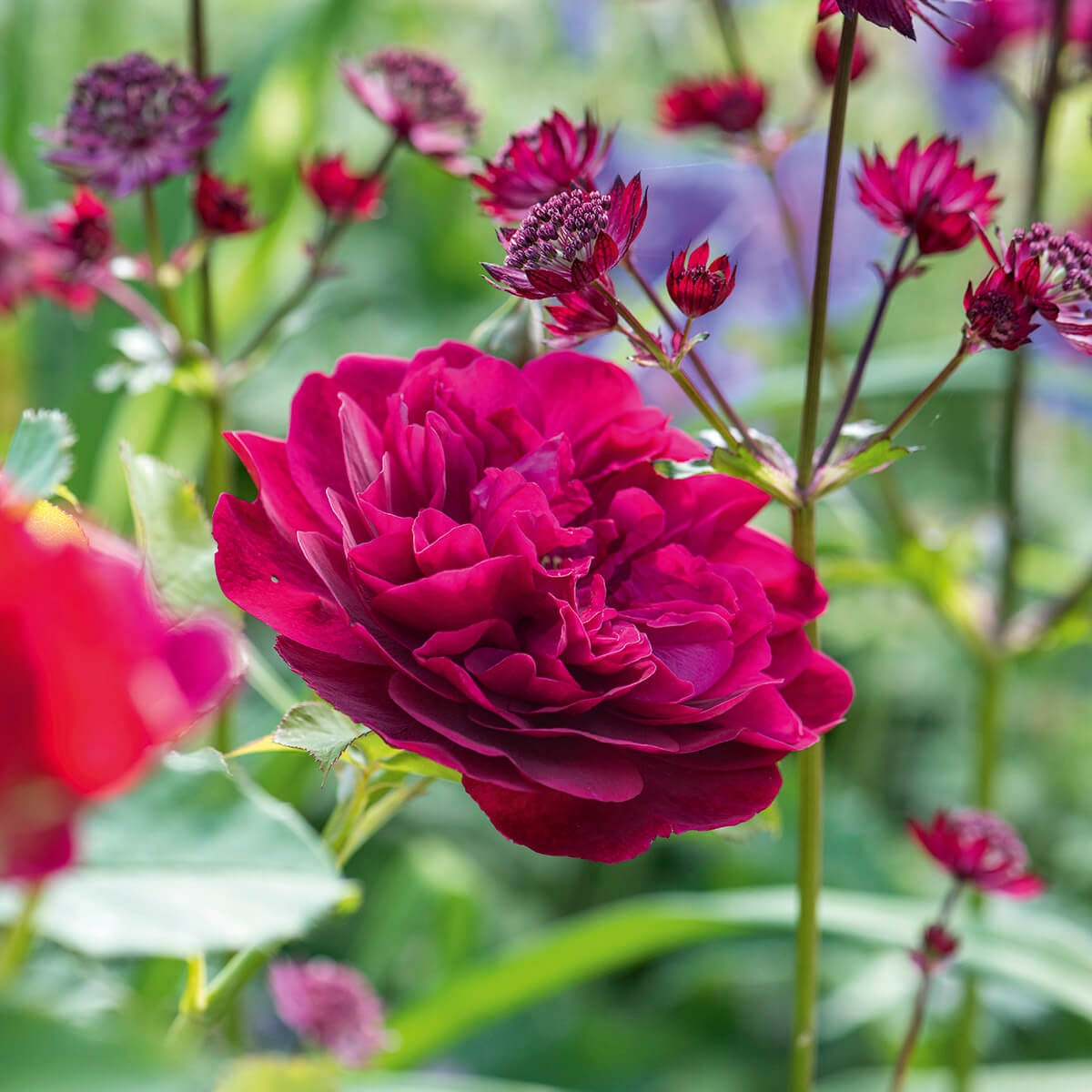
A red rose has a wonderfully compelling presence in the garden. Amongst a sea of green, even a glimpse of crimson catches the eye, drawing you closer for another look.
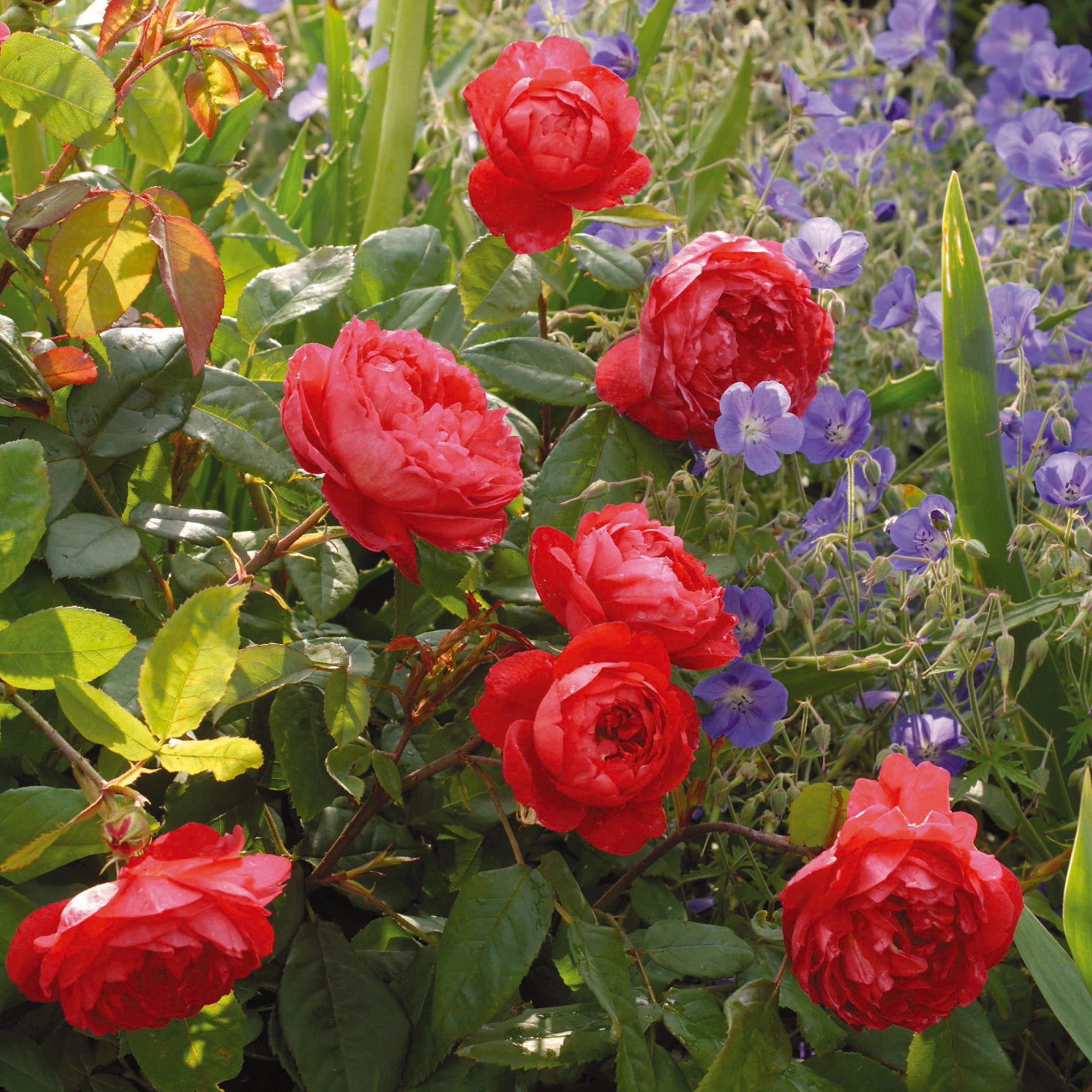
Red can sometimes have a reputation for being difficult to use, particularly alongside softer colours. Yet the palette is far more varied than we might first imagine. From clear crimson to deep, velvety tones, red roses can bring warmth, richness and depth to a garden without overwhelming it.
The secret is often simply knowing where to place them and what to grow alongside them.

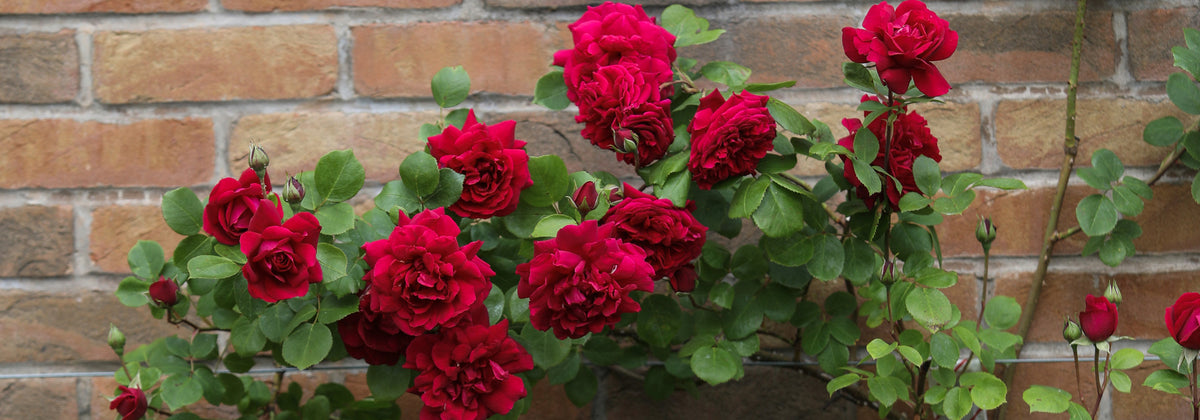

Finding the Right Red
Not all reds behave in quite the same way in a garden. Clearer crimson shades can feel wonderfully lively, while deeper tones have a richer, more contemplative quality, particularly in the softer light of morning and evening.
What to Plant with Red Roses
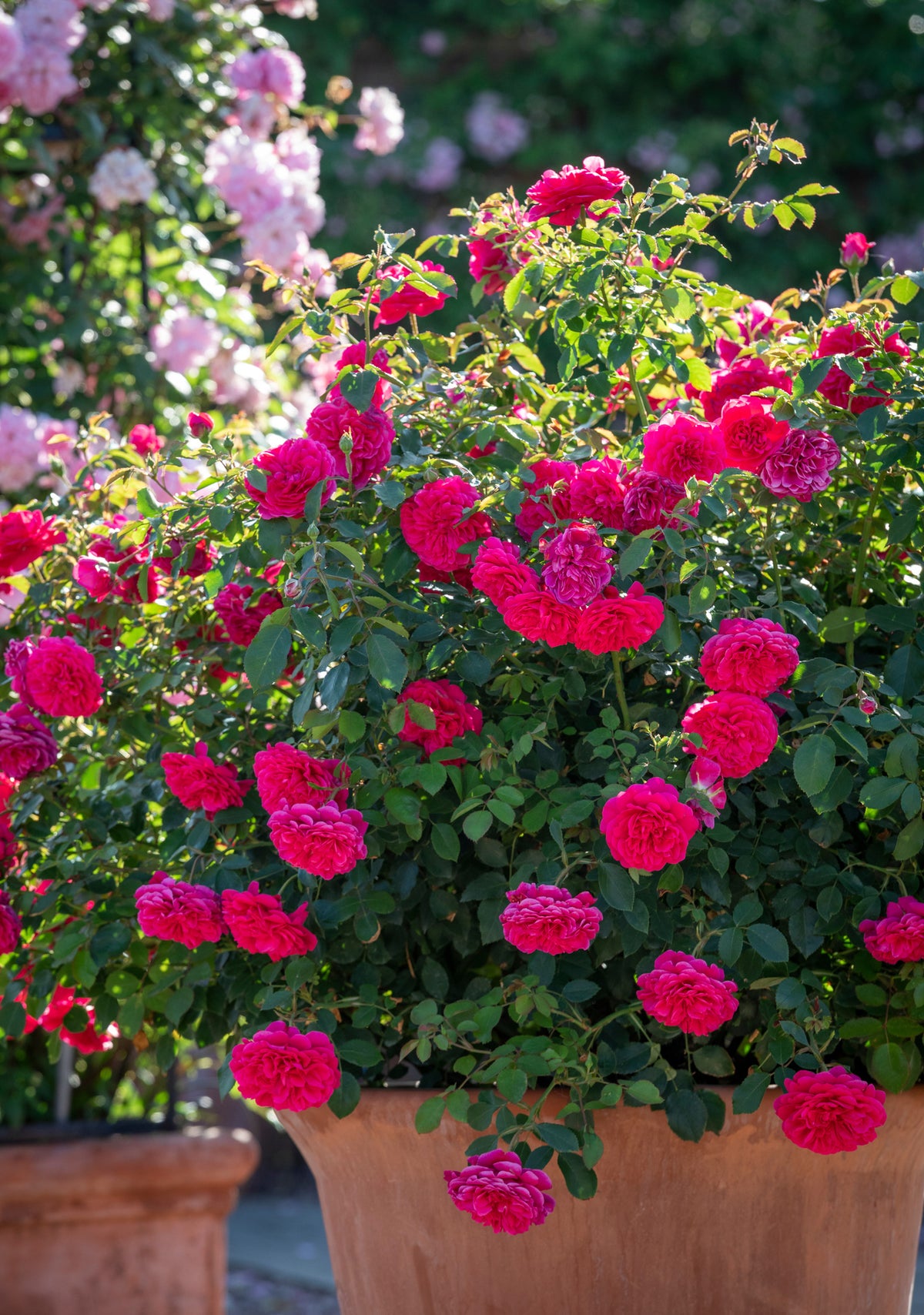
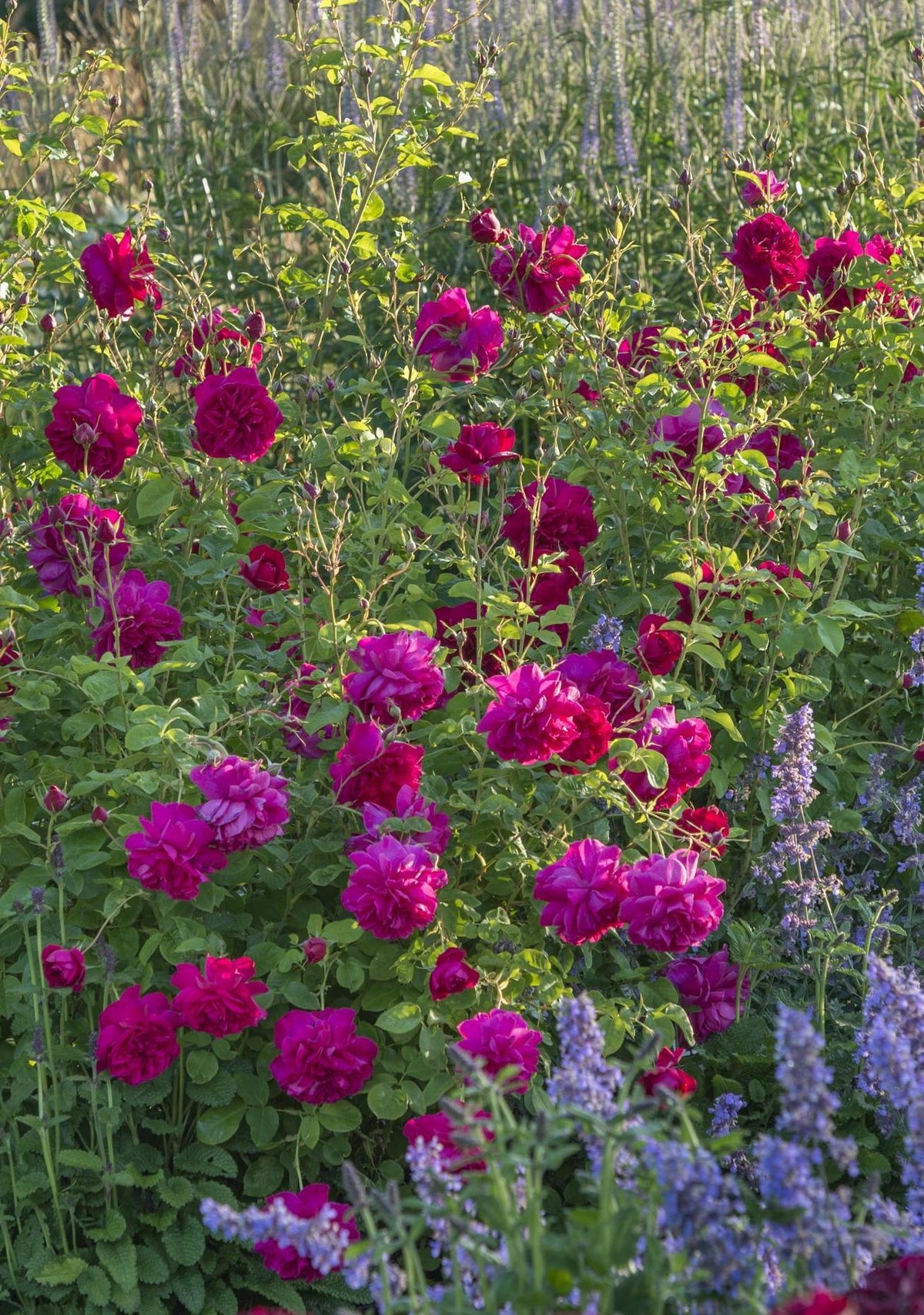
One of the simplest ways to enjoy red roses is to surround them with quieter companions.
Soft blues, mauves and purples are particularly good company. Nepeta, lavender, salvias and hardy geraniums provide a cool contrast to crimson flowers, allowing the roses to stand out without making the border feel overly bold.
For something lighter, try introducing touches of white, cream or silver. Silvery foliage, such as artemisia or stachys, can be especially beautiful beside a dark red rose, bringing out the richness of its petals.
And don't underestimate green. Sometimes abundant foliage is all a red rose needs. A crimson flower glimpsed amongst layers of fresh green leaves can be one of the simplest and loveliest combinations.
Look Beyond Red
A red colour scheme needn't be made up entirely of red roses. In fact, it can become much more interesting when closely related shades are allowed to mingle.
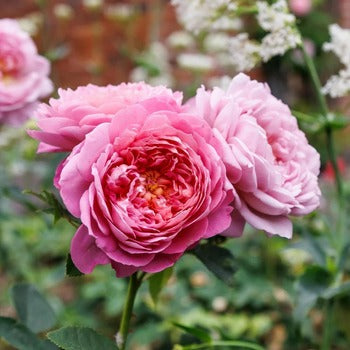
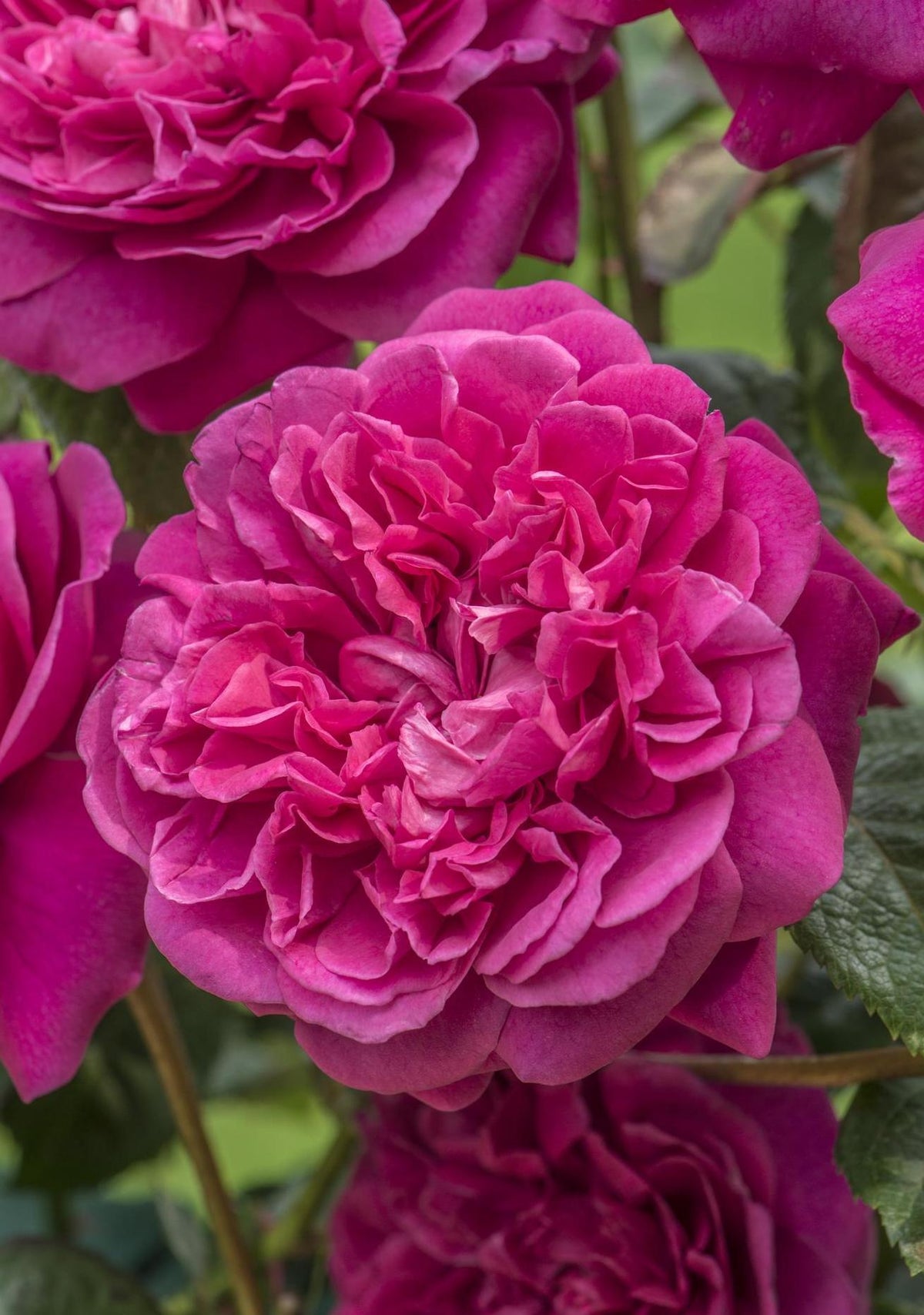
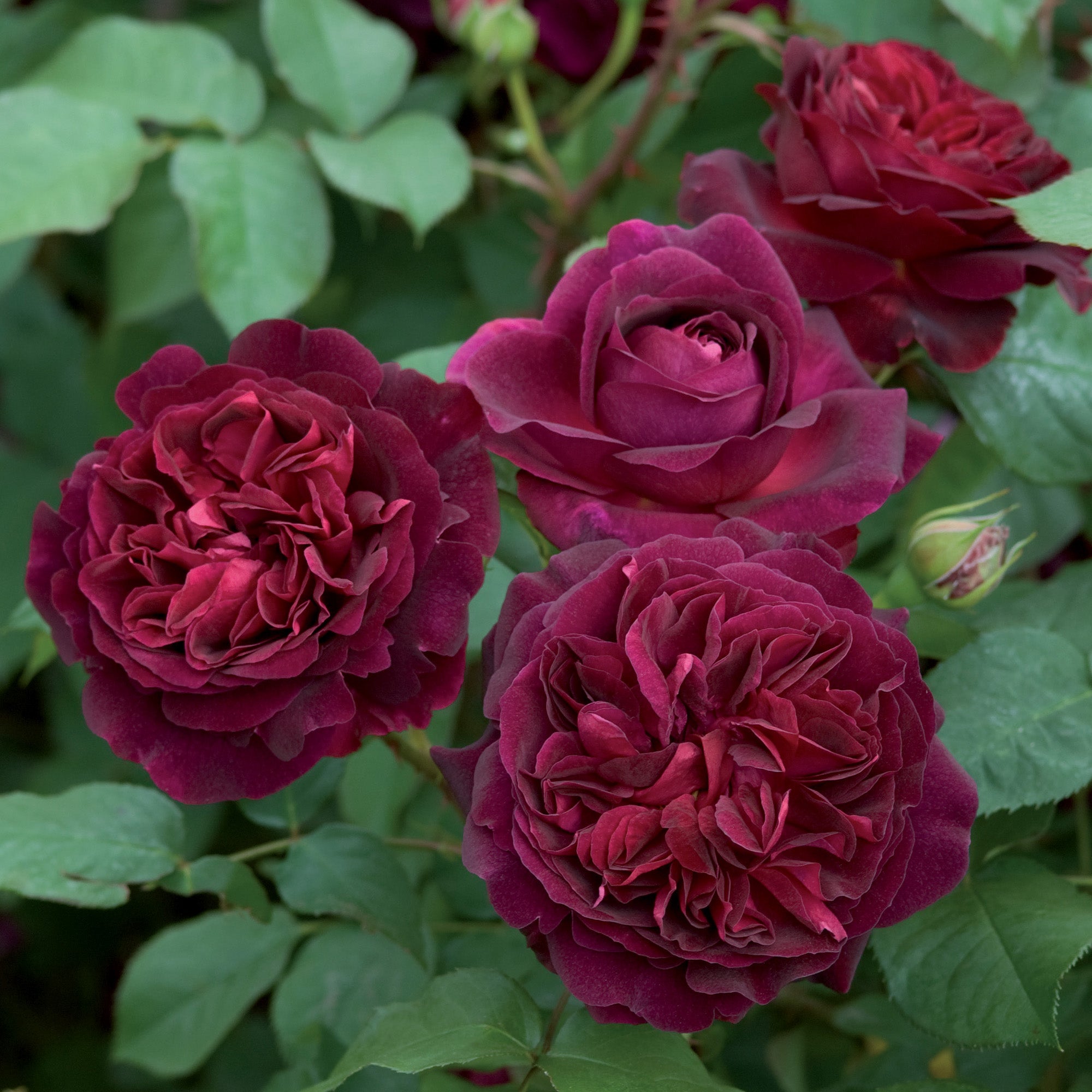
This is where roses such as Gabriel Oak® and James L. Austin® come into their own. Their rich, deep pink flowers sit comfortably alongside crimson and red, gently softening the transition into other colours in the border.
Gabriel Oak®, with its large, many-petalled rosettes and strong fruity fragrance, has a particularly sumptuous quality. Its mulberry-coloured stems and dark green foliage only add to the effect.
Bringing these deeper pinks together with reds creates a more layered palette, rather like the subtle variations of colour we find naturally within a flower itself.




Let Red Lead the Eye
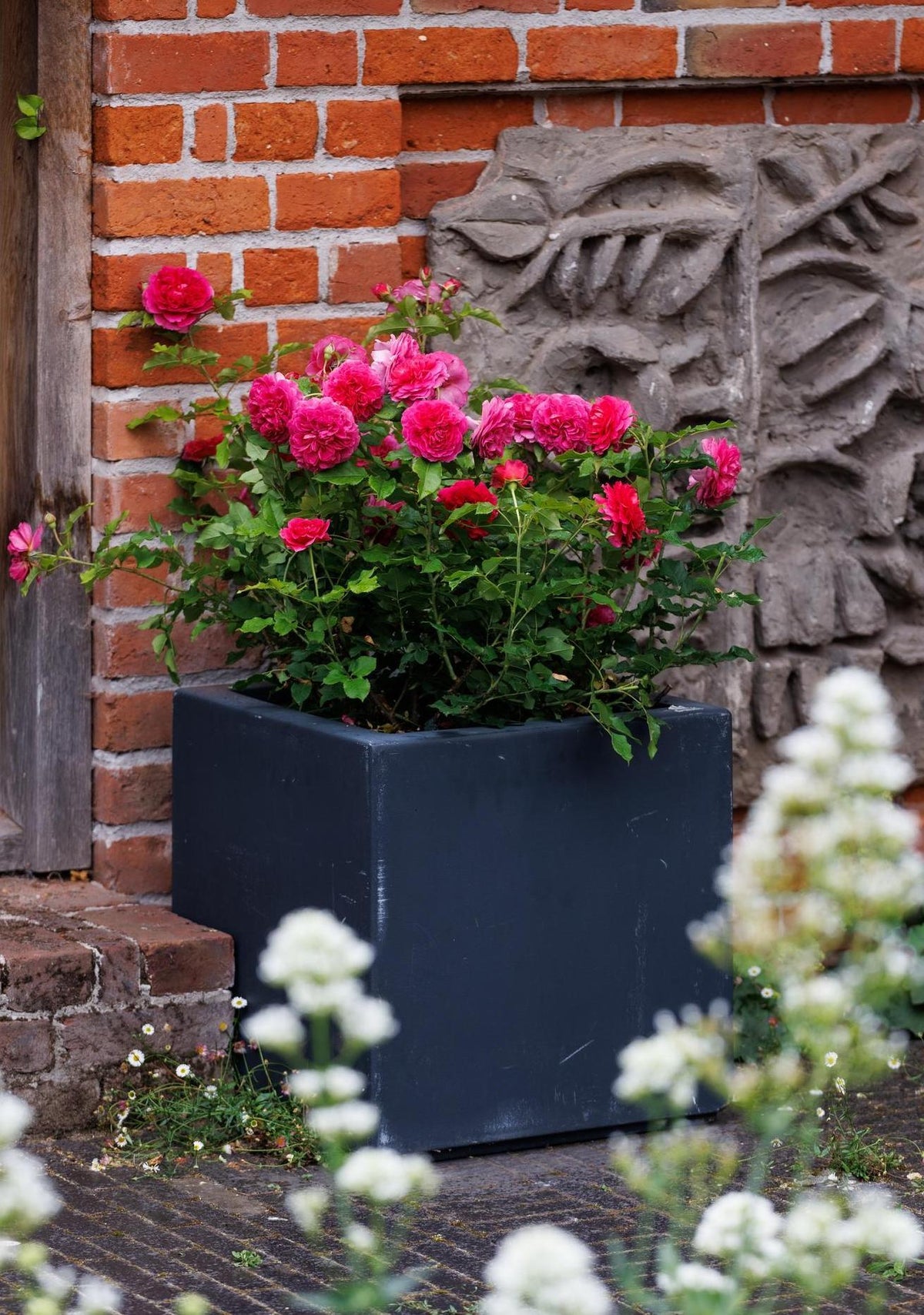
Red naturally attracts our attention, which makes it particularly useful for guiding the eye through a garden.
A red rose positioned towards the end of a path can encourage you onwards. One growing amongst softer planting can provide a point for the eye to settle upon. Used near a seat or doorway, it can give that part of the garden a distinct sense of place.
There is no need to dot red everywhere. Often, one generous moment of colour is far more effective.
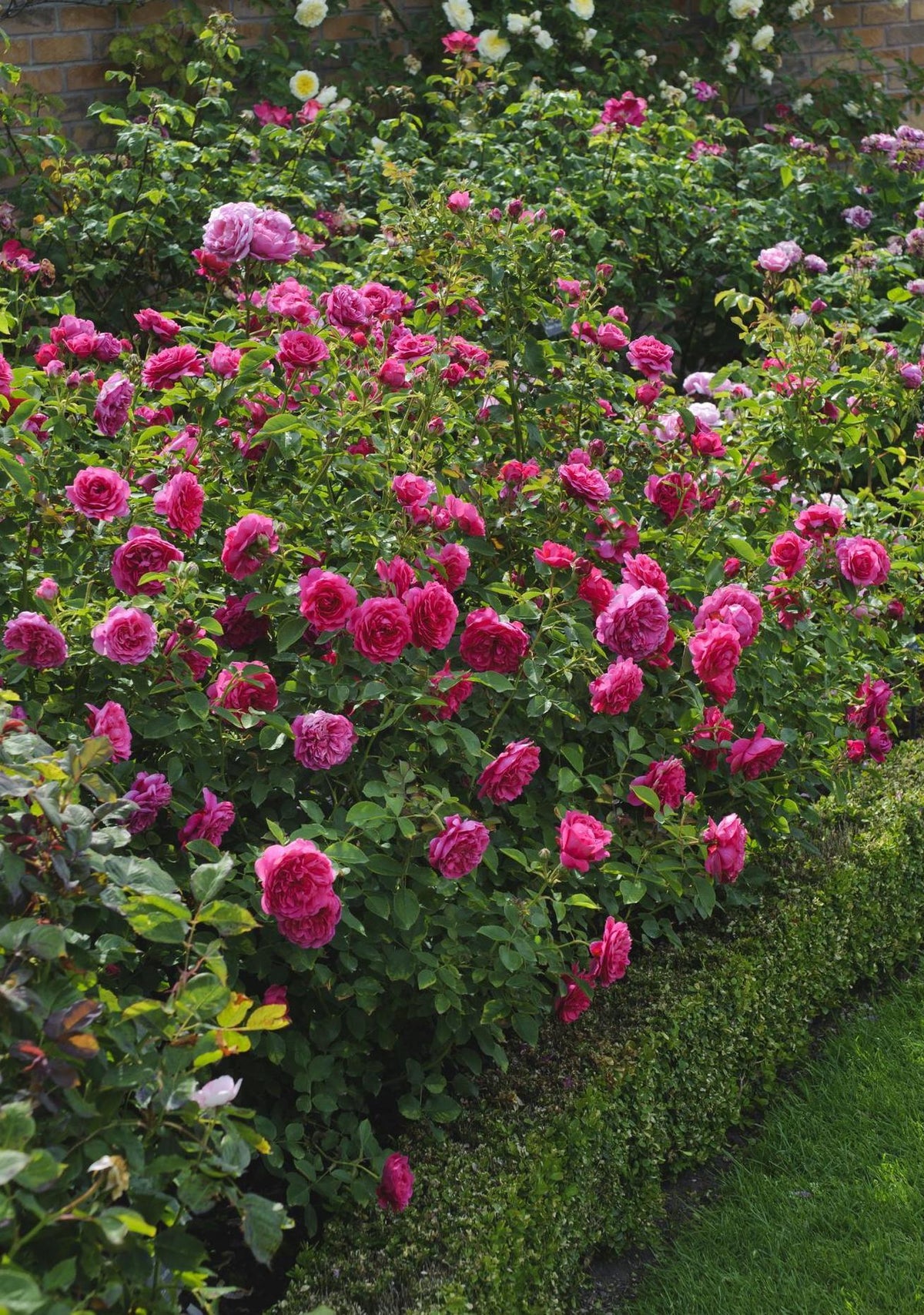
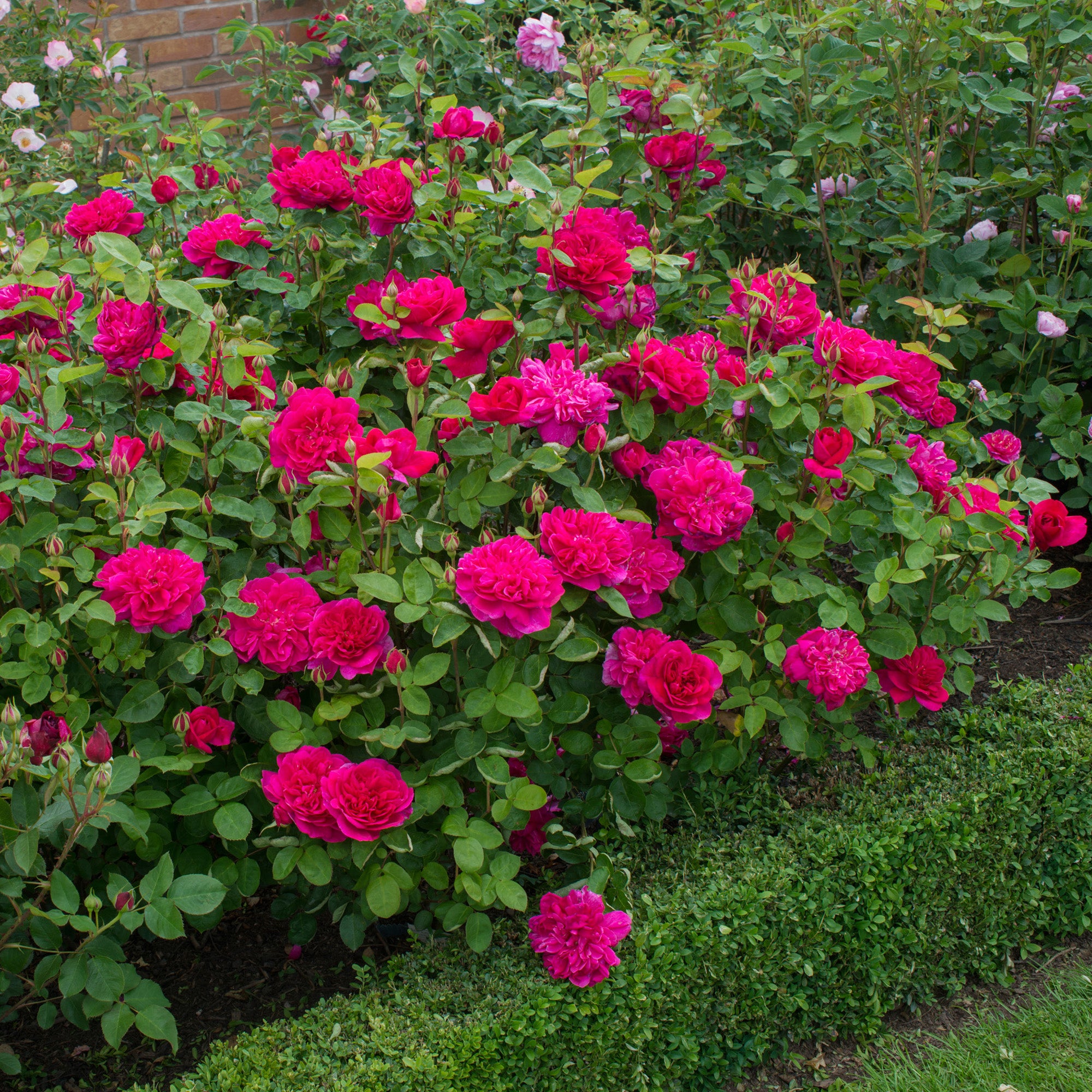
Planting several of the same variety together can create a particularly satisfying effect. A group of Sir John Betjeman, for instance, becomes a generous sweep of crimson rather than a collection of individual plants.
Alternatively, allow a single Thomas à Becket® a little more room. Its informal growth lends itself beautifully to a looser border, where its branches can mingle amongst neighbouring perennials.
Take Red Roses Upwards
Red takes on a rather different character when it leaves the border and begins to climb.
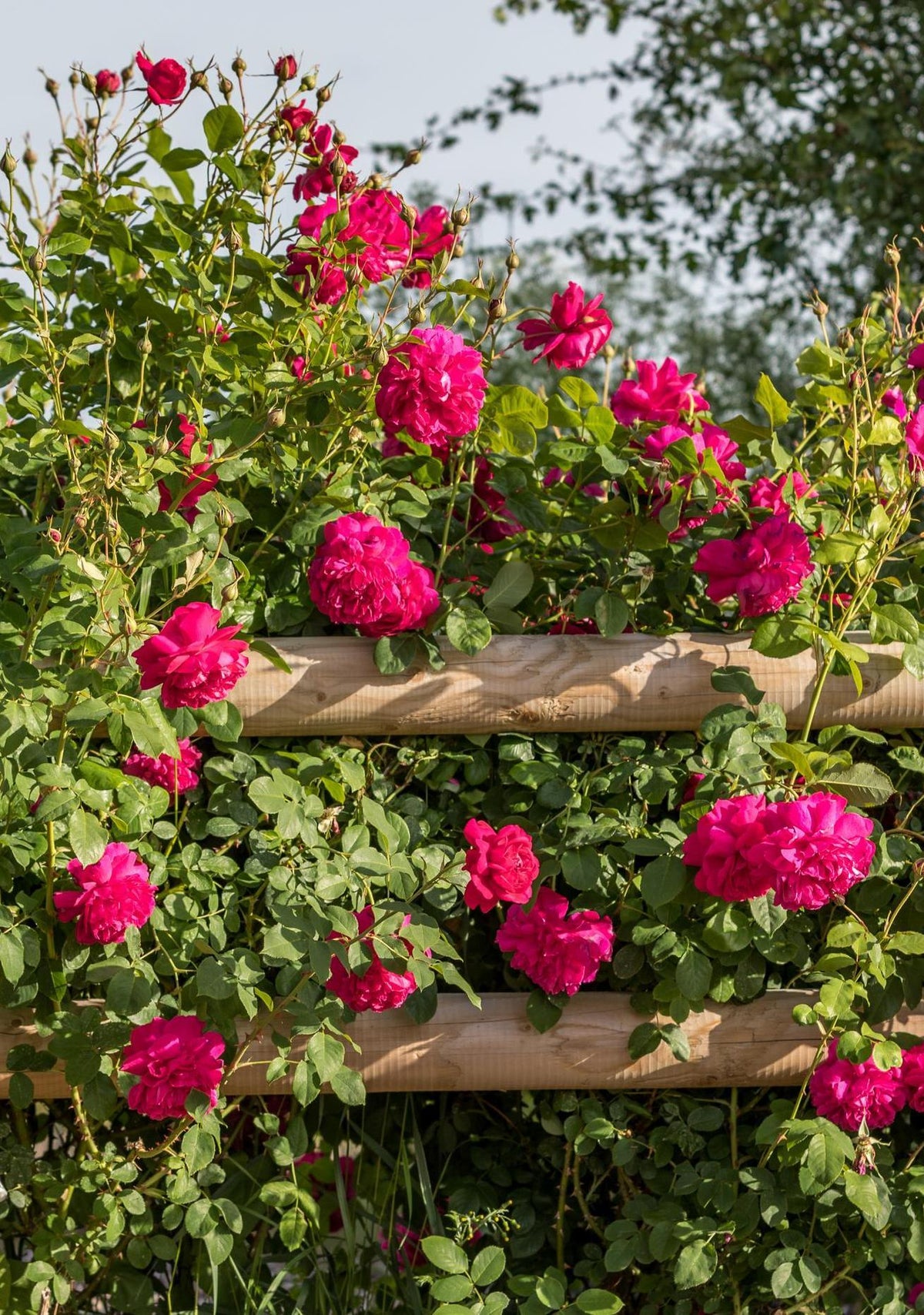
Imagine crimson flowers framing a doorway, spilling over a wall or softening the lines of an arch. Seen against the sky and surrounding greenery, even a rich red can suddenly feel light and natural.
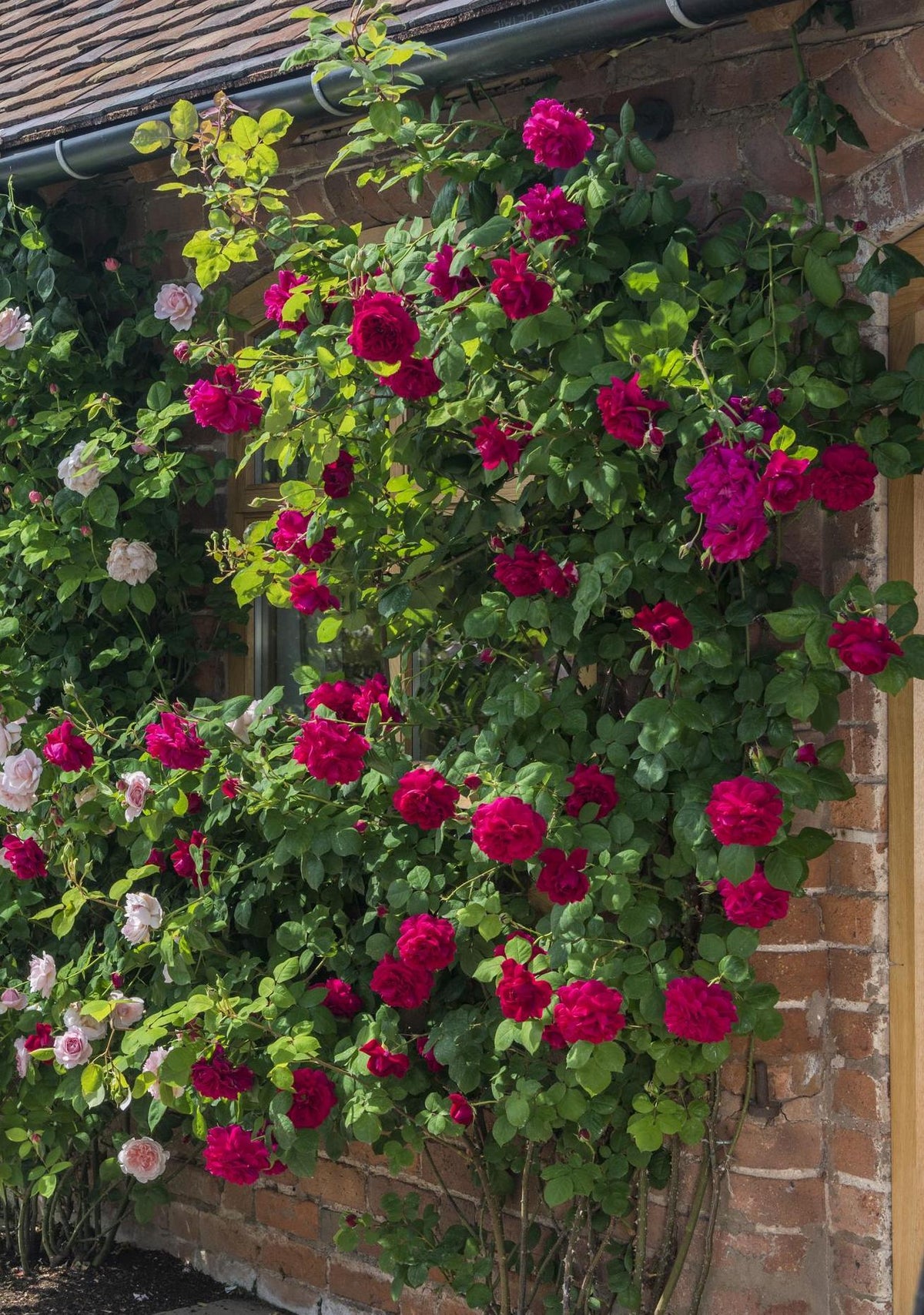
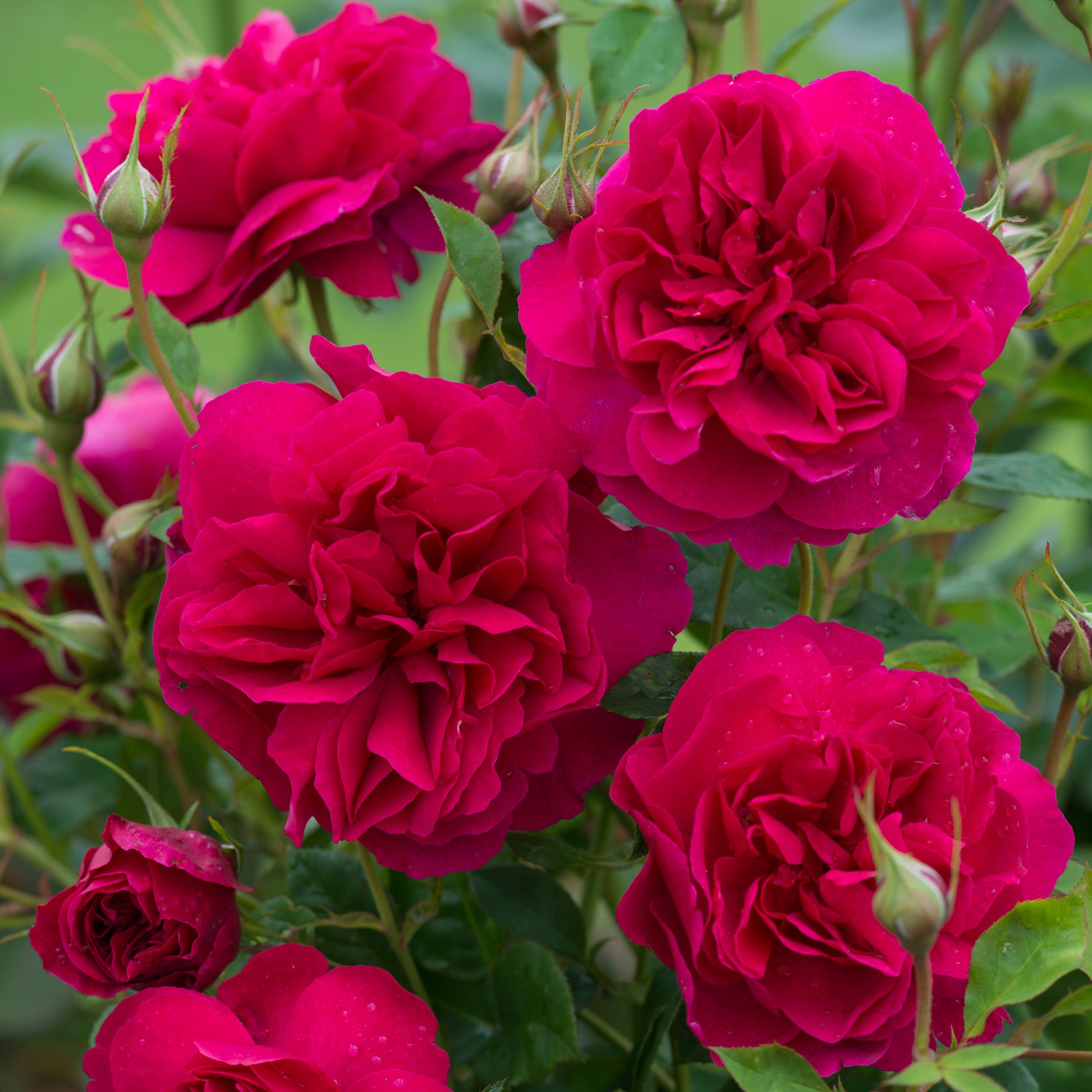
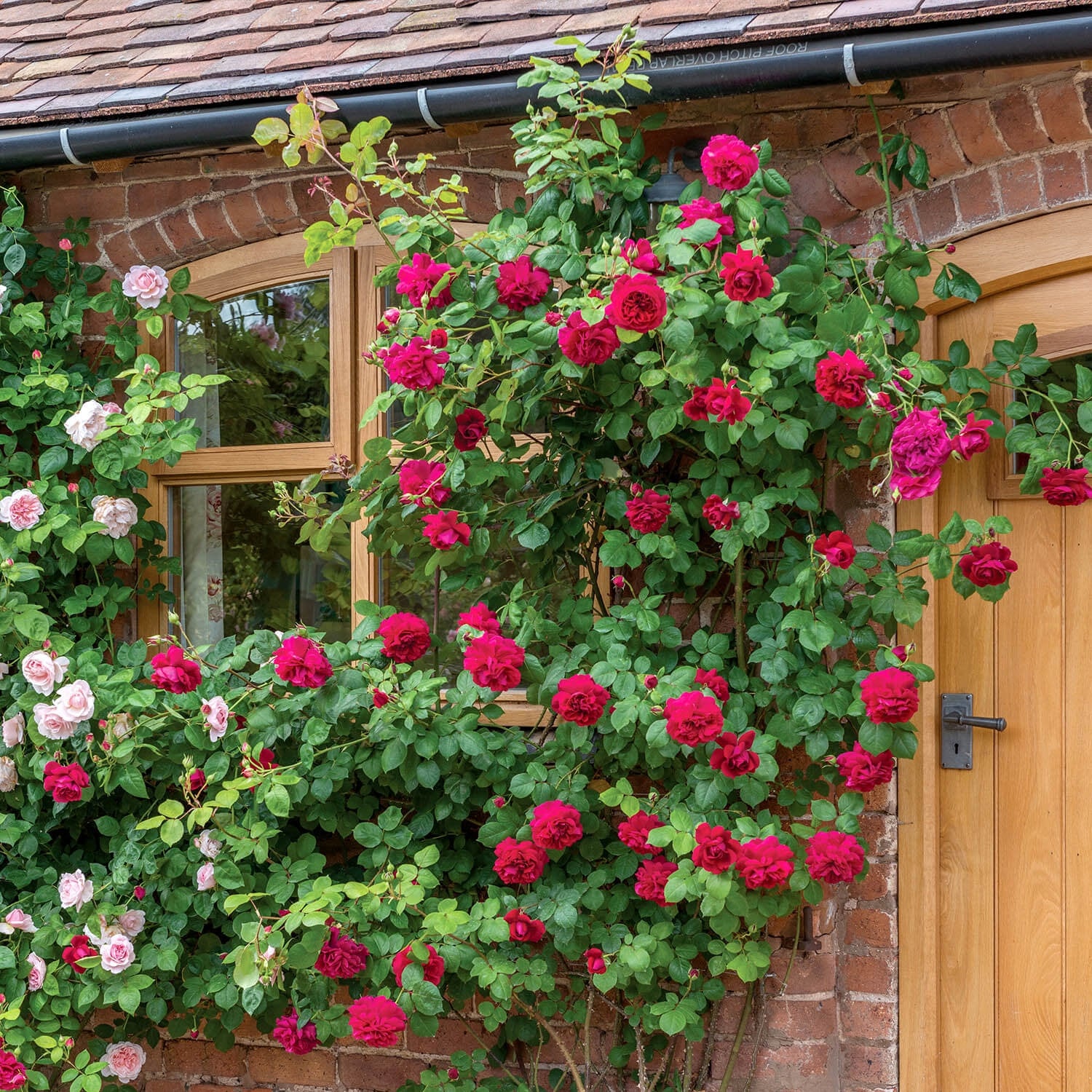
Tess of the d’Urbervilles® is particularly lovely used in this way. Its large, deeply cupped crimson-red flowers have a wonderfully informal character, while its flexible growth can be trained against a wall, over an arch or around a doorway. As the flowers open, their loosely arranged petals soften the richness of the colour.
An arch clothed in crimson can make a wonderful entrance into another part of the garden, especially when the planting beneath is kept softer and more restrained. Pale pinks, whites and silvery foliage allow the red to remain the focus, while helping it settle naturally into its surroundings.
Try a Richer Colour Palette
For those who enjoy deeper colours, red can also form the starting point for a wonderfully atmospheric planting scheme.
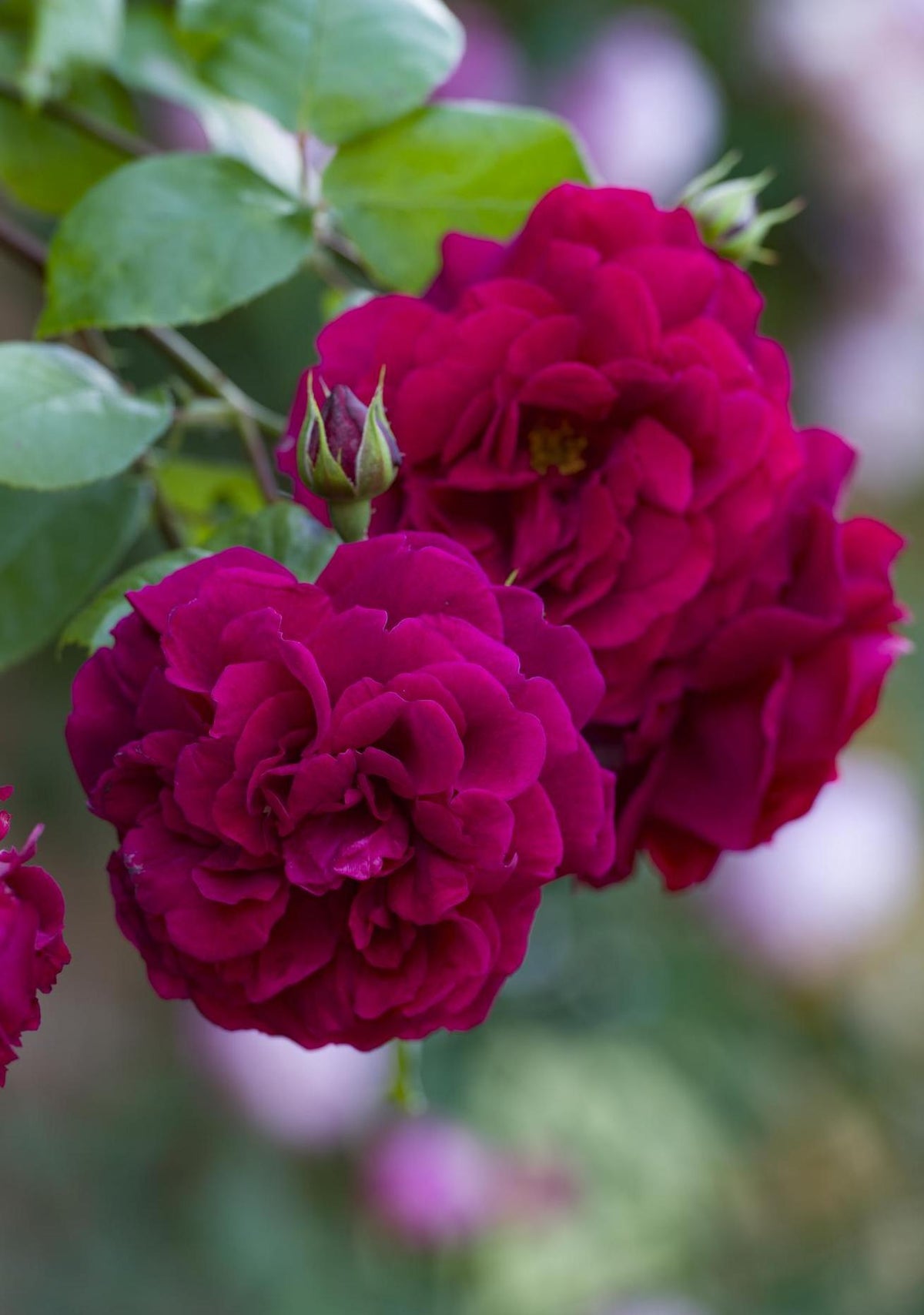
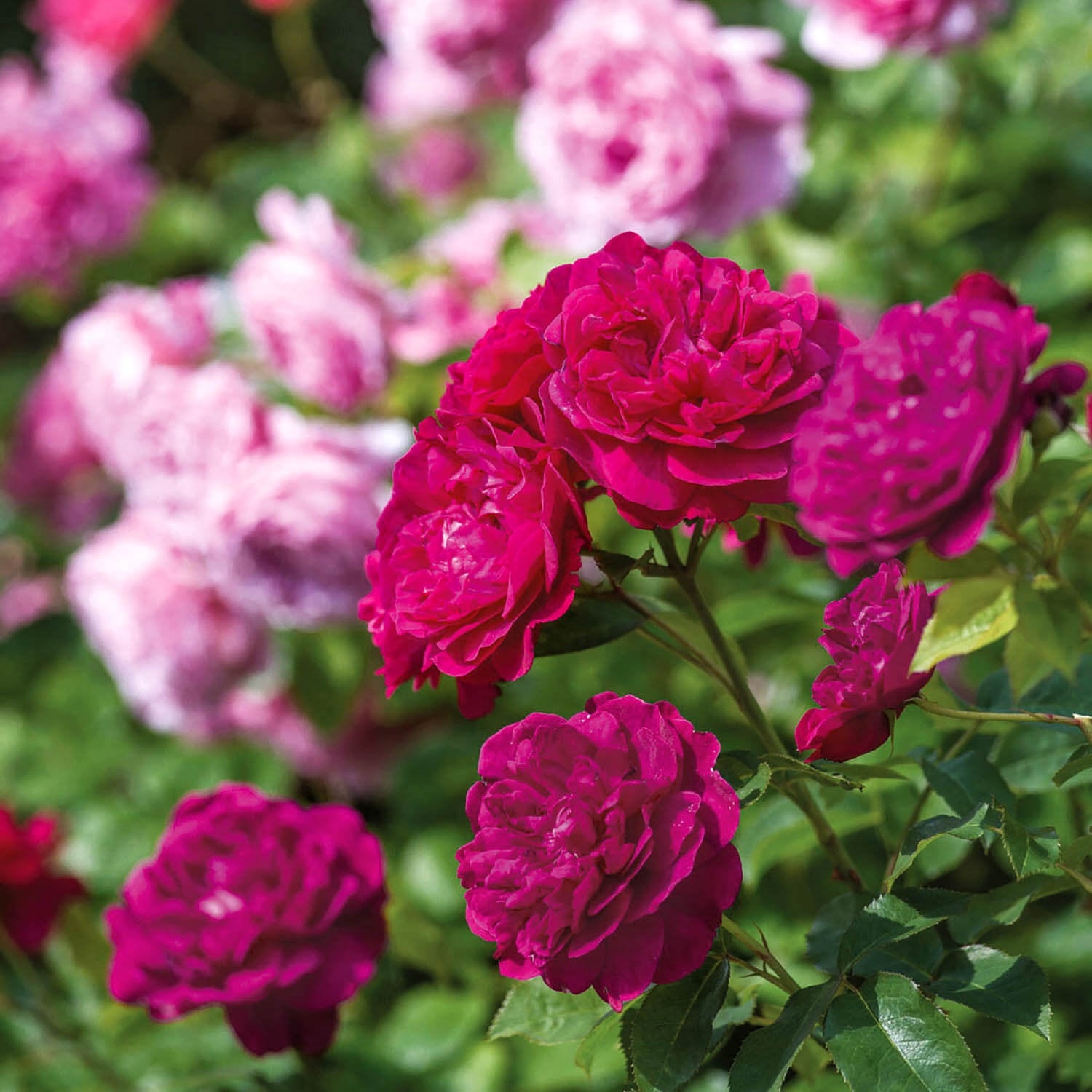
Combine crimson roses with deep pinks, plum, burgundy and purple. Roses such as Sir John Betjeman, Thomas à Becket®, Gabriel Oak® and James L. Austin® each bring a slightly different tone, giving the planting depth rather than creating one solid block of colour.
Dark foliage can make the scheme richer still, while an occasional touch of pale pink, soft blue or silver provides a little breathing space.
These combinations are particularly lovely later in the day. As the light softens, the deeper colours seem to become richer and the velvety quality of the petals comes to the fore.
Discover the Softer Side of Red
Perhaps the most enjoyable thing about growing red roses is discovering that they needn't behave quite as expected.
A bright crimson can bring a joyful spark to a green border. A deeper red can create a quiet, intimate corner. Add mauve, silver or soft pink and suddenly the colour that seemed rather bold becomes beautifully harmonious.
Used thoughtfully, red doesn't need to dominate a garden. Instead, it can appear here and there amongst the planting, catching your eye as you pass. A flash of crimson through foliage, a dark bloom beside silvery leaves, or a rambler spilling overhead can be quite enough.
And perhaps that is when red roses are at their loveliest. Not when they demand our attention, but when we happen upon them.
-
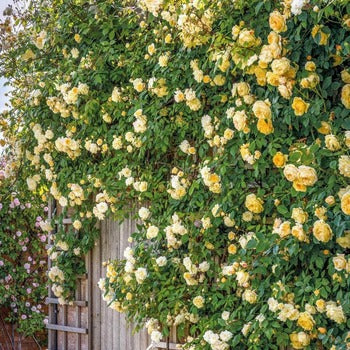
Using Yellow Roses to Bring Light and Warmth to the GardenYellow roses have a particular way of bringing light into the garden. From the palest lemon to rich, glowing gold, their colours can feel wonderfully inviting without necessarily being bold, illuminating a border much as sunshine does.

-
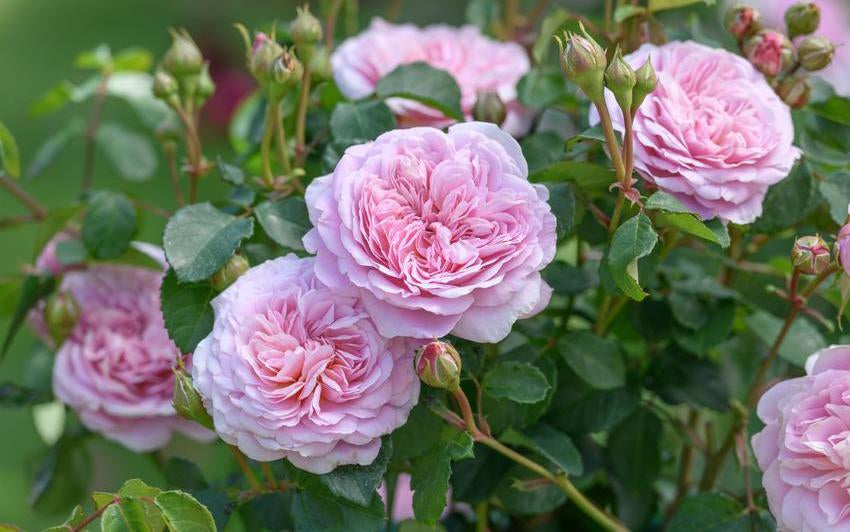
How to Design and Use Pink Roses in Your GardenPink roses possess a remarkable adaptability that allows them to completely alter the character of a garden. Depending on the shades and combinations you choose, they can create a soft, romantic pathway, a vibrant, modern border, or a rich landscape filled with deep jewel tones. Reliable and timeless, pink offers a beautiful shade and growth habit for every style of garden.
-
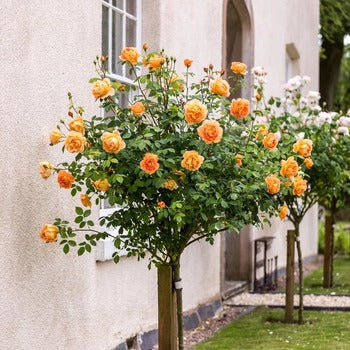
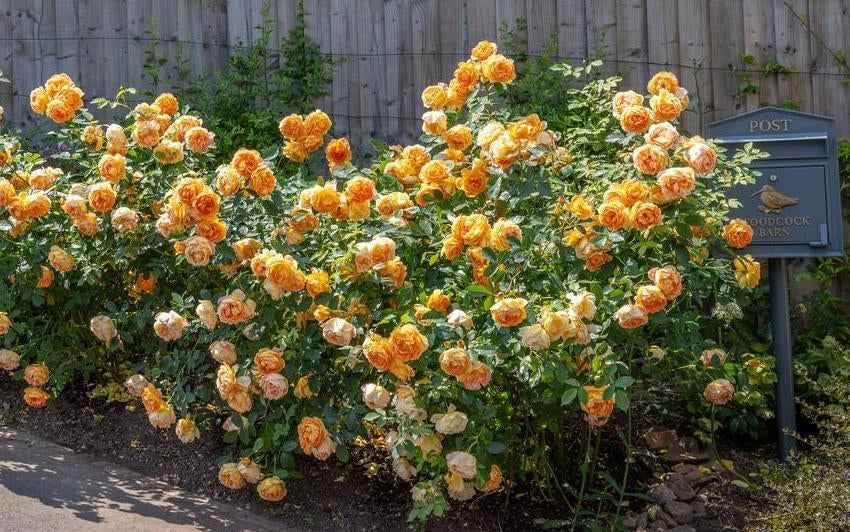
How to Design a Garden with Apricot and Orange RosesApricot and orange roses bring instant warmth to any garden design. These radiant shades bridge the gap between soft pastels and bold, dramatic colours. They capture the glowing light of late afternoon, making your outdoor space feel welcoming and alive. Whether you want a high-energy contrast or a soothing, monochromatic sanctuary, these sunset-toned blooms offer incredible versatility. They work brilliantly in traditional cottage borders, modern urban spaces, and formal courtyard displays alike.
-
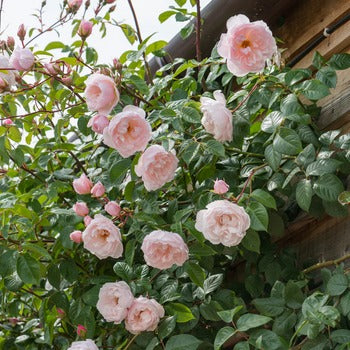
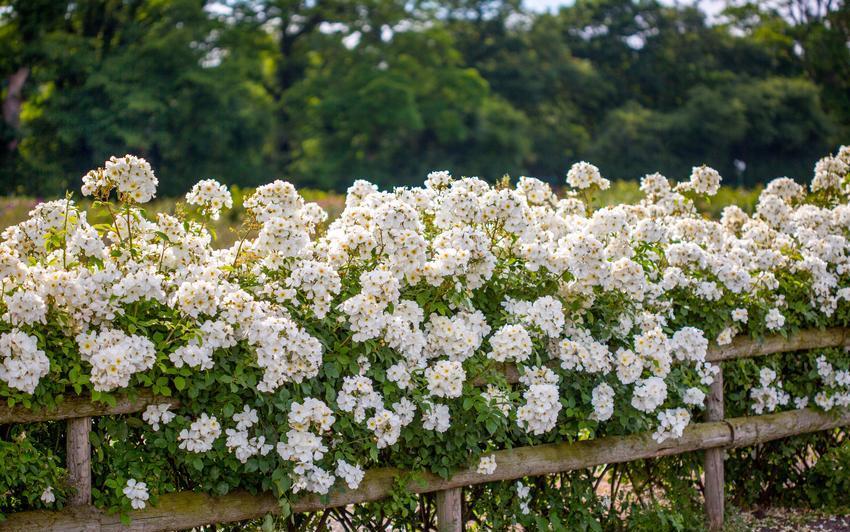
White and Cream Roses in the GardenThere is a quiet luminosity to white and cream roses. Soft yet radiant, they have a remarkable ability to lift the garden and bring a sense of calm to the planting around them. Equally at home in traditional gardens and more contemporary spaces, they offer a timeless elegance that never feels overstated. Whether woven through mixed borders, trained over old walls or planted generously in sweeping drifts, white and cream roses bring light, softness and cohesion wherever they grow.
-
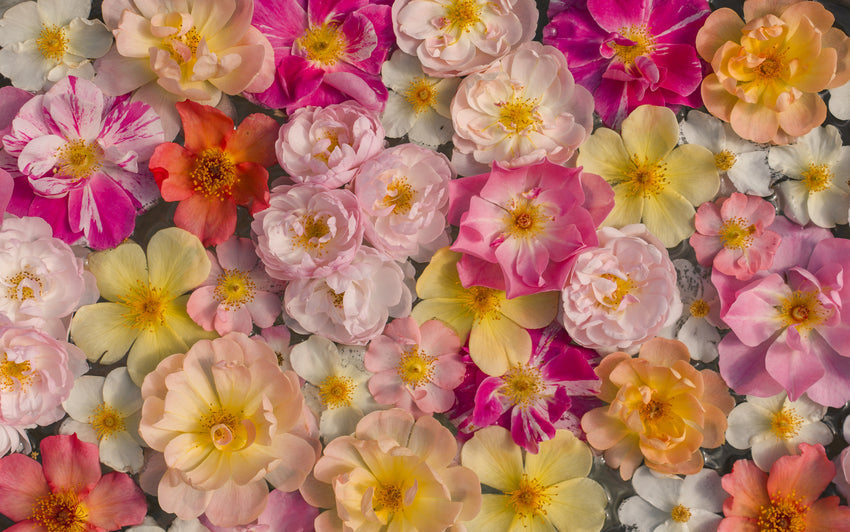
Rose Bloom Shapes: A Guide to the Different Types of Rose FlowersNo two roses are quite alike. Colour and fragrance may be what first catch the eye, but look a little closer and it is often the shape of the flower that gives a rose its particular character. Some blooms are simple and open, their golden stamens on full display. Others are made up of layer upon layer of petals, slowly unfurling into wonderfully intricate flowers. These different rose bloom shapes are the result of centuries of careful breeding and selection.
-
Finding the Right Rose for Your Garden: Choosing Your Rose ColourWhen choosing a rose, colour is often the first thing that captures our attention. Long before we notice fragrance or the form of the bloom, it is usually the colour that quietly draws us in.


