
Bare Root or Potted?
Why Our Roses Come Two Ways


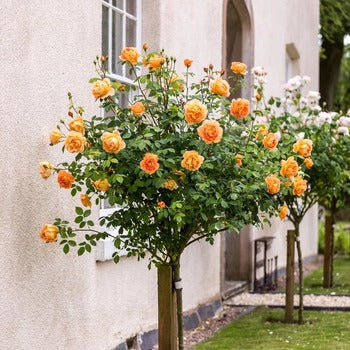
Across the year, you'll find two different forms of David Austin® rose available. For much of the year, our potted roses are ready and waiting, cut back and dormant during the cooler months, in leaf and growth through the warmer ones. Then, once the growing season draws to a close, our bare root roses come into their own, dug fresh from the field and sent out while fully dormant, just as English Roses have been grown and shared for generations.
Neither is the "better" rose. Every rose, whichever way it reaches you, is grown with the same care and to the same standard. The two are simply suited to different moments and different gardeners. Here's how to tell them apart and, more usefully, when each earns its place in your garden.
What Is a Bare Root Rose?
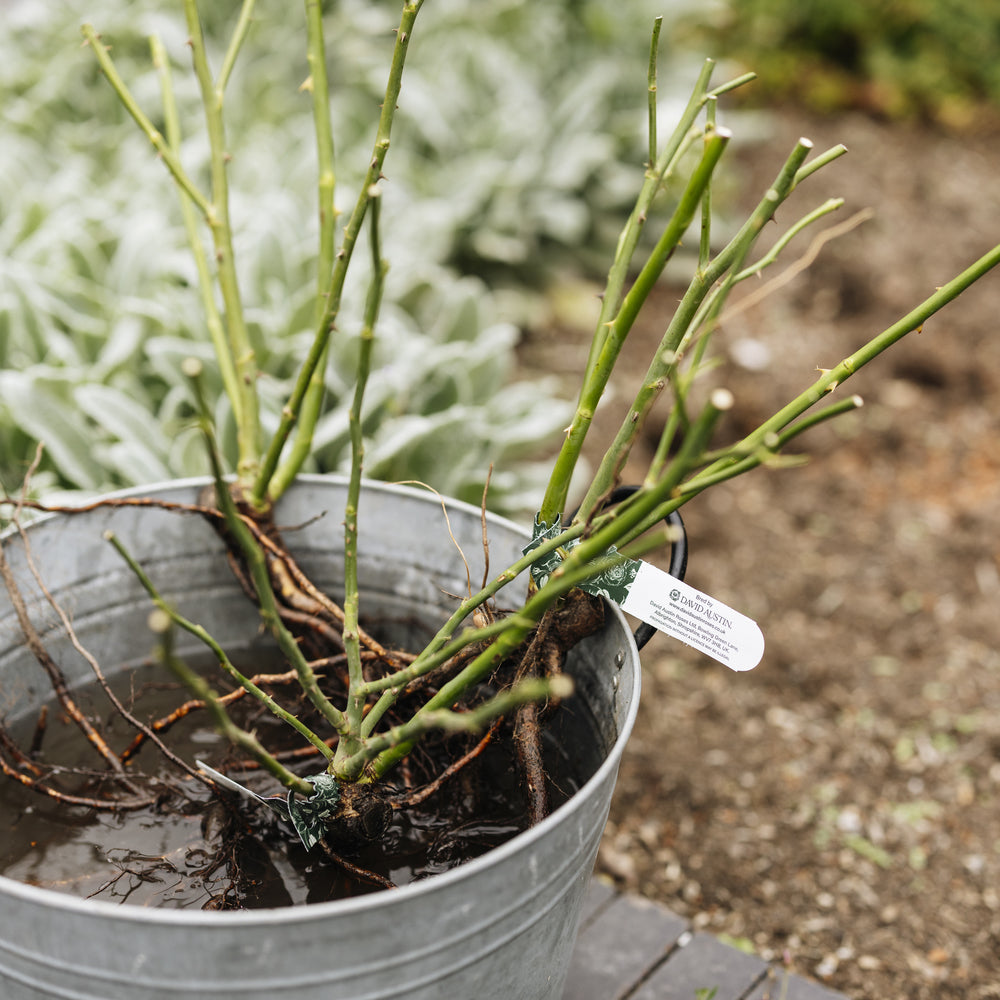
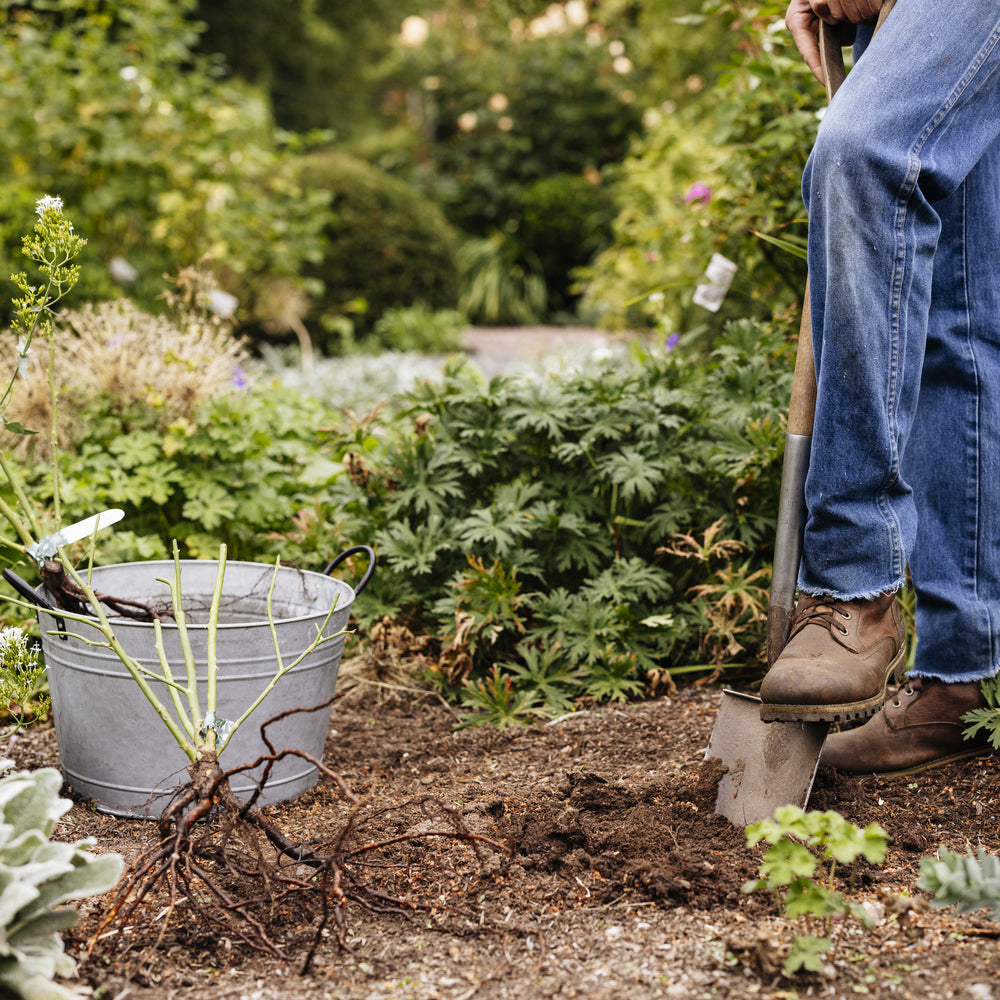
A bare root rose is lifted from the field while it's fully dormant, with the soil gently removed from its roots, and sent to you exactly as the name suggests: as roots, with no pot and no compost around them. It's a traditional way of growing and sharing roses that goes back well over a century, and it remains one of the very best ways to give a rose the strongest possible start in your garden.
The appeal:
-
1
Cost-effective. No compost, no pot, less handling: bare roots are typically much cheaper than the potted equivalent of the same variety.
-
2
A more sustainable way to plant. No plastic pot, less compost, and a lighter footprint in transport and packaging; bare root is roses in their simplest, most natural form.
-
3
Our fullest range. Bare root season is when we offer our widest choice of English roses, as it simply isn't practical to grow every variety in a pot.
-
4
Strong root establishment. Planted at the right time, the rose settles into your soil directly from day one, rather than having to break out of a "pot-shaped" root ball.
-
5
Lighter and easier to transport and plant. No heavy compost-filled pot to lug around the garden.
What Is a Potted Rose?
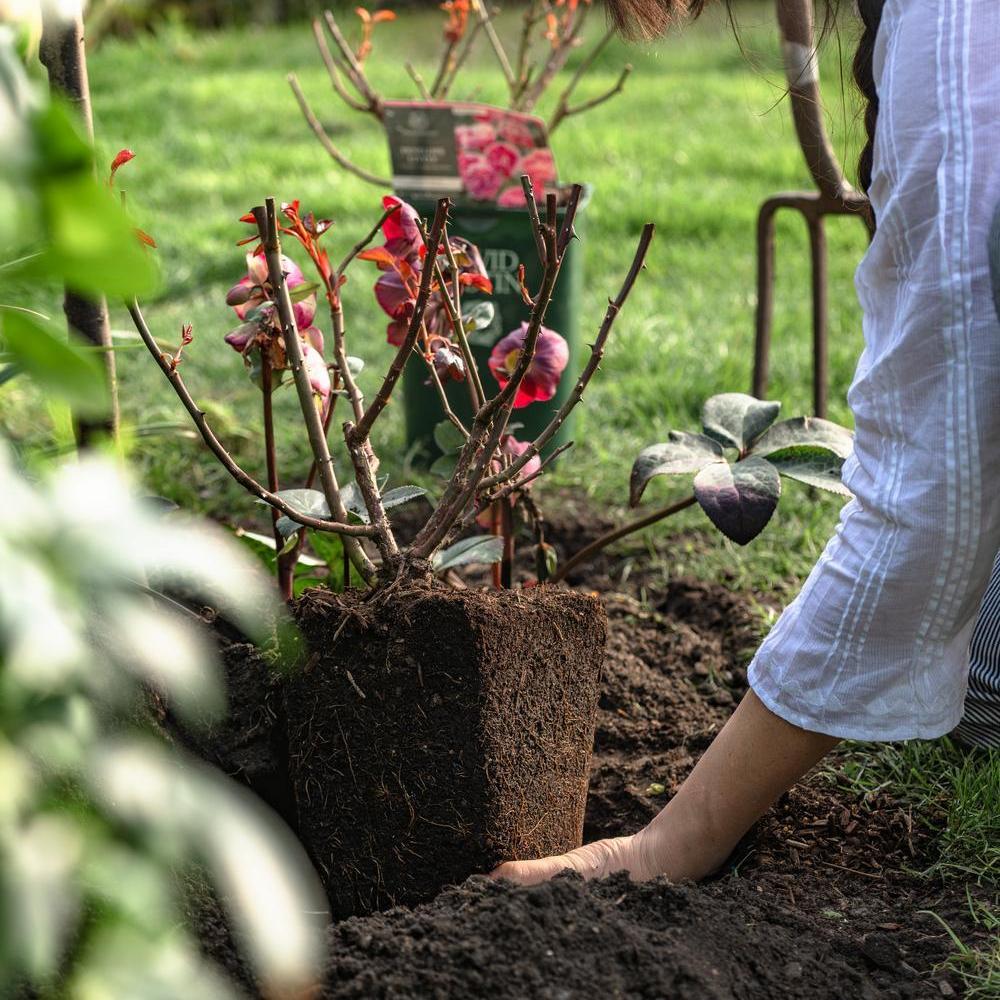
A potted rose is supplied growing in a container, with its root system established in compost. You can buy it, plant it, and, root disturbance aside, it barely notices the move. During the dormant winter months, we cut our potted roses back hard to prepare them for the season ahead, so at that time of year what you're looking at is a compact, pared-back plant rather than the leafy, flowering rose you'll see once growth resumes, full of promise for the display to come.
The appeal:
-
1
Plant almost any time of year. As long as the ground isn't frozen or waterlogged, a potted rose can go in the ground.
-
2
What you see is what you get. You can check the variety, sometimes even see it in flower before buying (in season), and know exactly what's arriving.
-
3
Instant gratification. Less waiting around for it to "become" a plant; it already is one.
-
4
Forgiving of timing. Perfect for a spur-of-the-moment garden project or filling a gap you've only just noticed.
So, Which One Do You Actually Need?
This is really the only question that matters, and the honest answer is: it depends on what you're doing.
Reach for a bare root rose if:
- You're planning a big dormant-season planting project: hedging, a rose bed, or a large order.
- You want excellent value, especially when buying several roses at once.
- You've got your eye on a specific, perhaps unusual, variety that's only available bare root.
- You like the idea of a more sustainable, traditional way of planting: the way English roses have been grown and shared for generations.
- You're planting for the long term; bare roots settle in and establish strongly, often growing on to match or outpace their potted counterparts within a season or two.
Reach for a potted rose if:
- You've spotted a gap in a border today and want to fill it now, rather than waiting for bare root season.
- You're planting outside the dormant window, say, in late spring or summer.
- You want to see the exact plant, or even the flower colour, before committing.
- You're new to growing roses and like the reassurance of seeing leaf and form from the outset.
Many of Our Gardeners Choose Both
Depending on the project, it's entirely natural to plant both bare root roses and potted in the same garden. Potted for the gap that needs filling today, or the rose you want to enjoy straightaway. Bare root for a considered, well-planned planting undertaken in the dormant season, when a rose can put down roots directly into your soil. There's no right way to garden, only the way that suits the moment.
Choosing the Right Moment
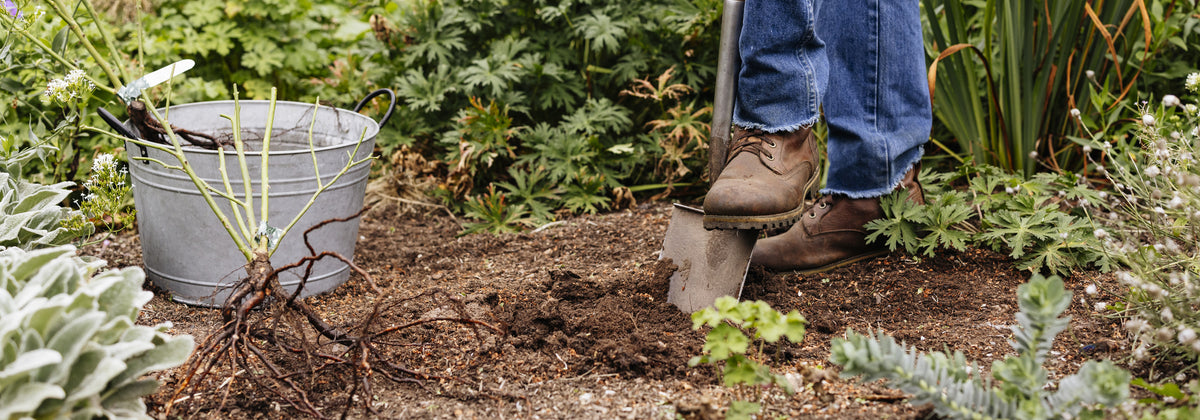
If you're planning ahead for a larger project, it's worth building your wish list in good time, ready to order as soon as bare root season opens for the varieties you have in mind. If you're planting outside the dormant season, our potted roses are ready and waiting whenever you are: a flexible choice for filling a gap or starting a new bed on your own timeline.
Whichever way you choose, you can be confident you're bringing home the same beautifully bred David Austin® rose, simply by a different path.
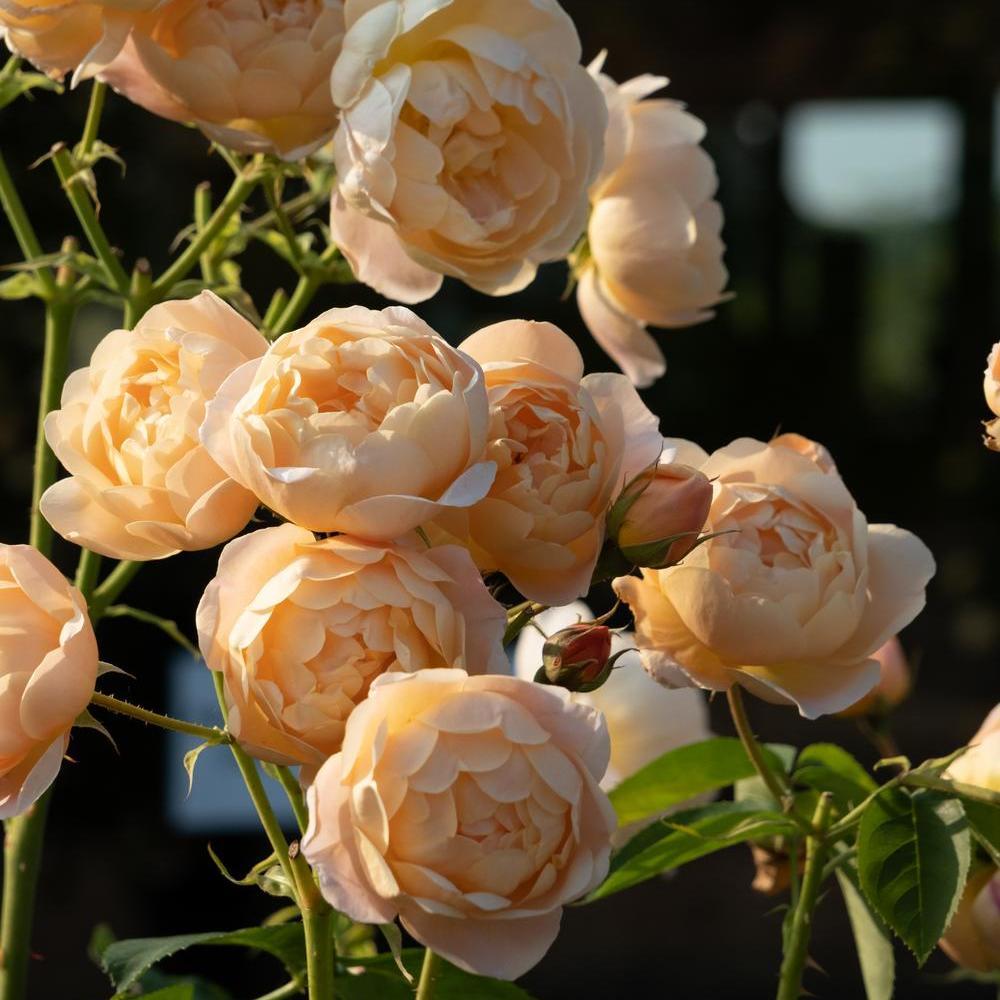
Potted Roses vs Bare Root Roses: Your Questions Answered
Potted roses are available year-round, offering the freedom to choose your roses whenever inspiration strikes. Bare root roses are available during the dormant season, making them a lovely choice for winter planting.
Potted roses offer greater flexibility and can be planted whenever conditions are suitable. Bare root roses are best planted within 2–3 weeks of arrival, while they are still dormant.
Bare root roses offer excellent value, making them ideal for planting several roses or creating a new rose bed. Potted roses are a more premium option, offering the pleasure of a more established plant and a quicker visual impact.
While potted roses offer a wonderful selection, our fullest range of varieties is available as bare root roses.
Bare root roses are light and easy to handle, making them particularly convenient when planting several roses. Potted roses arrive established in their pots, ready to be placed in the garden.
Bare root roses have a lower environmental footprint, as they are supplied without a pot and require less packaging.
Potted roses arrive already in leaf or ready to leaf up, offering a more immediate sense of life in the garden. Bare root roses arrive dormant, without leaves or flowers, but full of potential for the growing season ahead.
-
Bare Root or Potted? Why Our Roses Come Two WaysAcross the year, you'll find two different forms of David Austin® rose available. For much of the year, our potted roses are ready and waiting, cut back and dormant during the cooler months, in leaf and growth through the warmer ones. Then, once the growing season draws to a close, our bare root roses come into their own, dug fresh from the field and sent out while fully dormant, just as English roses have been grown and shared for generations.

-
Planting Bare Root Roses: Step-by-Step for Garden and PotsBare root roses arrive simply, as stems and roots, quietly waiting for the garden to bring them to life. With care, they can transform into lush, flowering plants, filling a garden with colour, fragrance, and presence. Affordable, easy to handle, and a traditional favourite among gardeners, they offer both charm and reward.

-
Moving a Rose: A Step-by-Step GuideRoses are wonderfully resilient, and sometimes a change of position is all that is needed to help one flourish. Perhaps a border is being redesigned, a rose would benefit from more sunshine, or a much-loved plant simply needs a little more room.
-
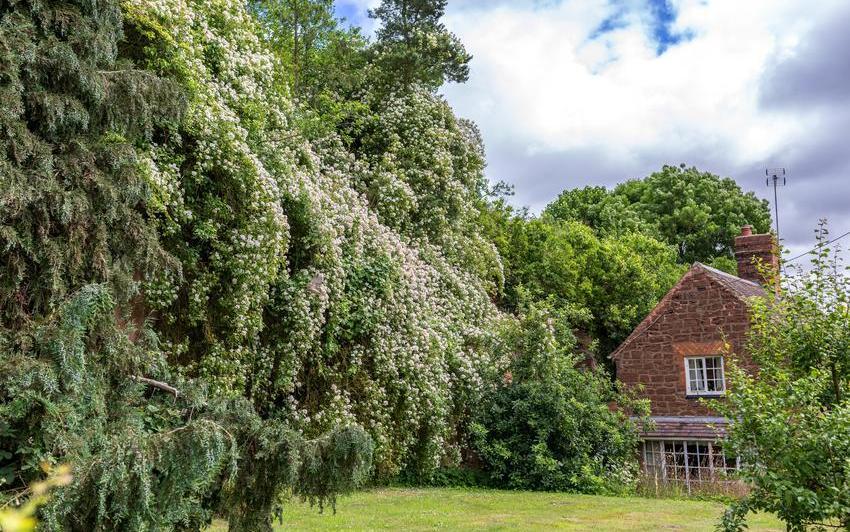
How to Plant and Grow a Rambling Rose Up a TreeRambling Roses have a natural affinity with trees. Their long, vigorous stems can be encouraged upwards into the branches, where they gradually weave through the canopy and open their flowers amongst the leaves. As the rose matures, the effect becomes increasingly natural, with great trusses of bloom appearing high above the ground and tumbling softly from the branches..
-
How to Grow Healthy Roses Without Chemical SpraysIt is perfectly possible to grow beautiful, healthy roses without routinely using chemical sprays. The key is to concentrate on the health of the rose and the garden around it, rather than trying to prevent every aphid, marked leaf or other sign of nature.
-
Summer Pruning Roses: What It Is and Why It MattersBy the height of summer, many repeat flowering roses will already have given a wonderful display, with some moving through their second flush of flowers. As blooms begin to fade, a little thoughtful care can help keep plants looking their best and encourage further flowers to follow.