






Moving a Rose: A Step-by-Step Guide
Roses are wonderfully resilient, and sometimes a change of position is all that is needed to help one flourish. Perhaps a border is being redesigned, a rose would benefit from more sunshine, or a much-loved plant simply needs a little more room.
Whatever the reason, moving an established rose is quite possible. Choosing the right time, preserving as much of the root system as you can and preparing its new home before you begin will all help it settle in beautifully.
If possible, wait until your rose is fully dormant before moving it. In the UK and Europe, this is usually between November and February, once the leaves have fallen and active growth has slowed.
During dormancy, there is less demand on the plant to support new leaves and flowers, making this the gentlest time to move it. The rose can then begin settling its roots into their new surroundings before growth gets underway in spring.
If you need to move a rose during the growing season, it can still be done, but you may see some temporary signs of stress. Wilting, yellowing leaves or flowers failing to open can all be signs of transplant shock. Keep the rose well-watered and consider using liquid seaweed to support it while it settles.
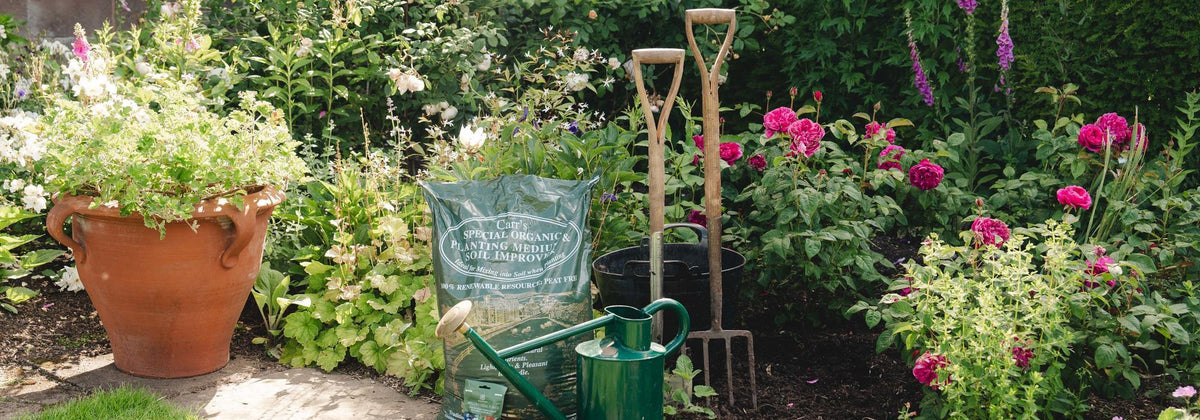
- Spade
- Gardening gloves
- Fork
- Secateurs
- Watering can
- Soil Improver or well-rotted Manure
- Large bucket
The secret to a smooth move is preparation. Have the rose's new home ready before you lift it, so its roots spend as little time out of the ground as possible.
 Step 1: Prepare the New Planting Hole
Choose the new position carefully, considering the light, space and drainage your rose will have as it matures.
Dig a generous hole, wide and deep enough to comfortably accommodate the roots. Roses appreciate rich, well-drained soil, so if yours is particularly heavy, sandy or poor, improve it with well-rotted manure or a good-quality soil improver.
Once the hole is prepared, you are ready to lift your rose.
 Step 2: Prune Before Moving
Before reaching for the spade, reduce the rose to a more manageable size.
Cut back some of the top growth and remove any dead, damaged or weak stems. If you are moving the rose during the growing season, remove the remaining foliage too.
As well as making the rose considerably easier to handle, this reduces the amount of growth its disturbed root system needs to support while it establishes.
 Step 3: Lift the Rose
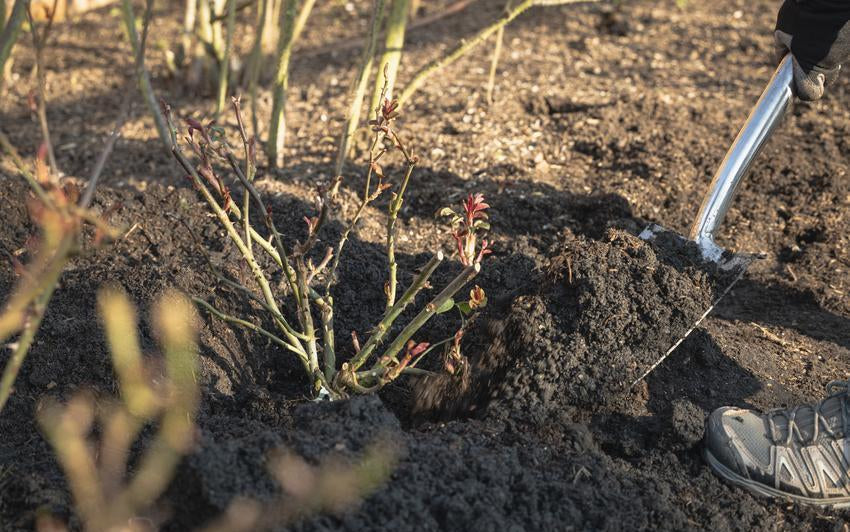
Aim to preserve as much of the root system as possible. Begin digging at least a spade’s width from the base, gradually working around the plant and loosening the soil with a spade or fork.
Established roses can have substantial root systems, so take your time. Some roots may be lost, but keeping as many intact as possible will help the rose settle in its new position.
Once free, lift the rose carefully. If you cannot replant immediately, keep the roots moist and protected from sun and wind.
 Step 4: Replant with Care
Take the rose straight to its prepared planting hole and position the roots comfortably within it.
The graft union, the swollen area where the rose has been grafted onto its rootstock, should sit around 2 inches below soil level.
Backfill carefully, gently firming the soil around the roots to remove large air pockets without compacting it too heavily.
- Step 5: Water Well
Once planted, give your rose a generous watering.
For its first year in the new position, treat it much as you would a newly planted rose. Water regularly, particularly during dry weather, and keep an eye on its progress as it begins to establish new roots.
If the new position has previously been home to another rose, there is one additional step to take before planting.
Step 1: Replace the Old Soil
Remove as much of the soil from the previous planting hole as reasonably possible and replace it with fresh soil from another part of the garden or good-quality topsoil.
Adding well-rotted manure or soil improver will help create a welcoming environment for the incoming rose.
Once the planting position is prepared, follow the same steps as above:
- Prune the rose
- Lift it carefully
- Replant with Mycorrhizal Fungi
- Water thoroughly
Common Mistakes to Avoid When Moving a Rose
Moving a rose is quite forgiving, but a few simple precautions can make its transition much easier.
Don't lift the rose before its new home is ready.
Preparing the planting hole first means the roots spend as little time exposed as possible.
Don't let the roots dry out.
If you cannot replant immediately, keep them moist and sheltered until you are ready.
Don't forget to prune.
Reducing the top growth makes the rose easier to move and helps lessen the demands placed on its disturbed roots.
Don't plant into the same soil where another rose has grown.
Replace the old soil with fresh soil or good-quality topsoil before planting.
Don't forget to water.
Regular watering is particularly important while new roots establish and even more so if you have moved the rose during warmer weather.
Don't be too concerned by a little transplant shock.
A newly moved rose may wilt or look rather unhappy for a while. Keep it well watered and give it time to settle.










-
Bare Root or Potted? Why Our Roses Come Two WaysAcross the year, you'll find two different forms of David Austin® rose available. For much of the year, our potted roses are ready and waiting, cut back and dormant during the cooler months, in leaf and growth through the warmer ones. Then, once the growing season draws to a close, our bare root roses come into their own, dug fresh from the field and sent out while fully dormant, just as English roses have been grown and shared for generations.

-
Planting Bare Root Roses: Step-by-Step for Garden and PotsBare root roses arrive simply, as stems and roots, quietly waiting for the garden to bring them to life. With care, they can transform into lush, flowering plants, filling a garden with colour, fragrance, and presence. Affordable, easy to handle, and a traditional favourite among gardeners, they offer both charm and reward.

-
Moving a Rose: A Step-by-Step GuideRoses are wonderfully resilient, and sometimes a change of position is all that is needed to help one flourish. Perhaps a border is being redesigned, a rose would benefit from more sunshine, or a much-loved plant simply needs a little more room.
-
How to Plant and Grow a Rambling Rose Up a TreeRambling Roses have a natural affinity with trees. Their long, vigorous stems can be encouraged upwards into the branches, where they gradually weave through the canopy and open their flowers amongst the leaves. As the rose matures, the effect becomes increasingly natural, with great trusses of bloom appearing high above the ground and tumbling softly from the branches..

-
How to Grow Healthy Roses Without Chemical SpraysIt is perfectly possible to grow beautiful, healthy roses without routinely using chemical sprays. The key is to concentrate on the health of the rose and the garden around it, rather than trying to prevent every aphid, marked leaf or other sign of nature.

-
Summer Pruning Roses: What It Is and Why It MattersBy the height of summer, many repeat flowering roses will already have given a wonderful display, with some moving through their second flush of flowers. As blooms begin to fade, a little thoughtful care can help keep plants looking their best and encourage further flowers to follow.